
Traveling abroad for the first time is one of the most exciting experiences you can have. Exploring a new country, discovering different cultures, tasting local foods, and creating unforgettable memories can be both thrilling and life-changing.
However, planning an international trip can feel overwhelming if you have never done it before. Questions about passports, visas, flights, accommodation, transportation, travel insurance, and budgeting often leave first-time travelers unsure where to begin.
The good news is that planning an international trip is much easier when you break the process into simple steps. This guide will walk you through everything you need to know to confidently prepare for your first international adventure.
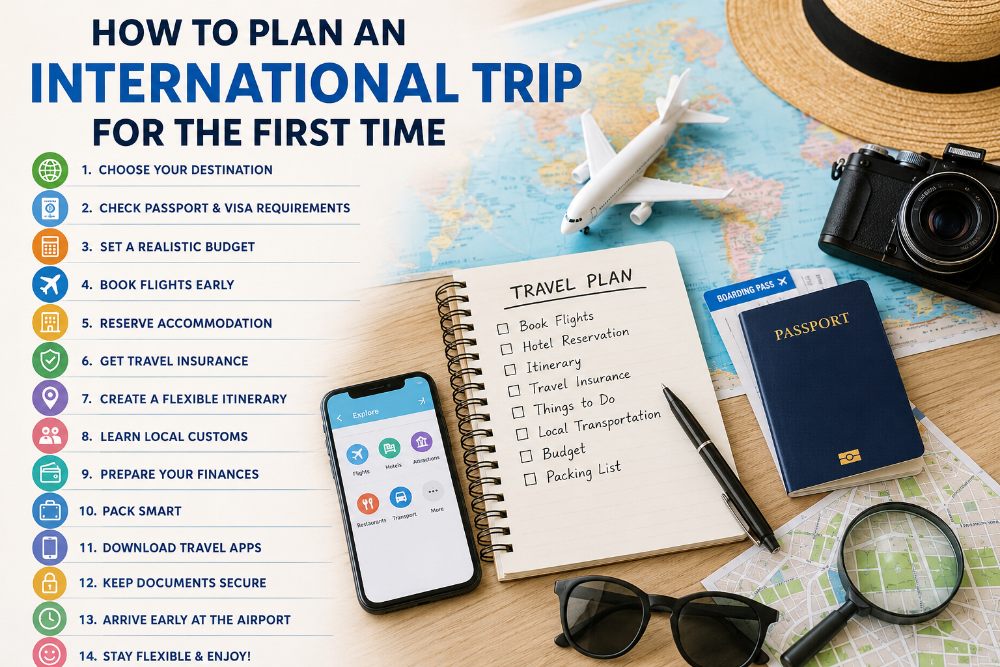
1. Choose the Right Destination
The first step is deciding where you want to go.
Many first-time travelers make the mistake of choosing a destination solely because it looks beautiful on social media. While inspiration is important, practical factors matter just as much.
Consider the following:
- Your budgetTravel season
- Visa requirements
- Flight costs
- Language barriers
- SafetyActivities you enjoy
For example:
- If you love beaches, consider Bali, Phuket, or the Maldives.
- If you’re interested in history, Rome, Athens, or Kyoto may be ideal.
- If you enjoy city life, Tokyo, Singapore, or London could be perfect.
Choose a destination that matches both your interests and your budget.
2. Check Passport and Visa Requirements
Before booking anything, verify that your passport is valid.
Many countries require your passport to remain valid for at least six months beyond your arrival date.
You should also research:
- Visa-free entry rules
- Electronic visas (eVisa)
- Visa-on-arrival options
- Required travel documents
Requirements vary significantly between countries, so always check official government immigration websites before making travel arrangements.
3. Set a Realistic Travel Budget
Creating a travel budget helps prevent financial stress during your trip.
Your budget should include:
Transportation
- International flights
- Domestic flights
- Train tickets
- Public transportation
- Airport transfers
Accommodation
- Hotels
- Hostels
- Guesthouses
- Vacation rentals
Daily Expenses
- Meals
- Attractions
- Shopping
- Local transportation
Emergency Fund
Unexpected expenses can happen during any trip. Keeping a reserve fund provides peace of mind and flexibility.
A good rule is to save an additional 10–20% beyond your estimated budget.
4. Book Flights Early
Flights are often the largest travel expense.
Booking early can help you secure better prices and more convenient schedules.
When comparing flights, consider:
- Total travel time
- Number of layovers
- Baggage allowances
- Departure and arrival times
- Airline reputation
Flexible travel dates often lead to significant savings.
You May Also Like



Midweek departures and off-season travel periods frequently offer lower fares than weekends and holidays.
5. Reserve Accommodation in Advance
Once your flights are booked, it’s time to choose where you’ll stay.
For first-time international travelers, accommodations in central locations are often worth the extra cost because they reduce transportation expenses and save time.
Popular accommodation options include:
Hotels
Ideal for comfort, convenience, and additional services.
Hostels
Budget-friendly and great for meeting other travelers.
Apartments
Excellent for longer stays and travelers who prefer more space.
Before booking, read recent reviews and check:
- Safety ratings
- Location
- Wi-Fi quality
- Transportation access
- Cancellation policies
6. Purchase Travel Insurance
Many travelers overlook travel insurance until they need it.
Travel insurance can protect you from:
- Medical emergencies
- Trip cancellations
- Lost luggage
- Flight delays
- Travel disruptions
Medical treatment abroad can be expensive, making travel insurance a valuable investment for international travelers.
Even a short trip can benefit from adequate coverage.
7. Create a Flexible Itinerary
One common mistake is overplanning every minute of a vacation.
Instead, create a balanced itinerary.
Include:
- Major attractions
- Day trips
- Restaurant ideas
- Cultural experiences
- Relaxation time
Leave room for spontaneous discoveries.
Some of the best travel experiences happen when you explore without a strict schedule.
8. Learn Basic Local Customs
Understanding local culture helps travelers avoid misunderstandings and show respect.
Research:
- Greetings and etiquette
- Appropriate clothing
- Tipping customs
- Public behavior expectations
- Religious considerations
Learning a few local phrases can also make interactions more enjoyable.
Simple expressions such as:
- Hello
- Thank you
- Please
- Excuse me
can go a long way in building positive connections with locals.
9. Prepare Your Finances
Before departure, notify your bank that you will be traveling internationally.
This can help prevent your cards from being temporarily blocked due to unusual transactions.
Consider carrying:
- Credit cards
- Debit cards
- Emergency cash
- A backup payment method
Avoid relying entirely on one card or one source of funds.
It’s also helpful to understand exchange rates and local payment preferences before arrival.
10. Pack Smart and Light
Packing efficiently makes travel easier.
Start by checking the weather forecast for your destination.
Essential items often include:
- Passport
- Travel insurance documents
- Chargers
- Power adapter
- Medications
- Comfortable shoes
- Copies of important documents
Many first-time travelers overpack.
Choose versatile clothing items that can be mixed and matched throughout the trip.
Remember that you can often buy forgotten items at your destination if necessary.
11. Download Helpful Travel Apps
Travel apps can simplify your journey considerably.
Useful categories include:
Navigation
Maps and transportation apps help you move around unfamiliar cities.
Translation
Language tools make communication easier.
Flight Tracking
Stay informed about delays, gate changes, and schedule updates.
Accommodation Management
Keep reservation details accessible offline.
Downloading offline maps before departure can be especially useful when internet access is limited.
12. Keep Important Documents Secure
Always protect your travel documents.
Consider storing:
- Passport copies
- Flight confirmations
- Hotel reservations
- Insurance information
both digitally and physically.
Cloud storage can provide quick access if documents are lost.
Using a hotel safe or secure travel pouch can also improve security during your trip.
13. Arrive at the Airport Early
International travel usually requires additional procedures compared to domestic flights.
For most international departures, arriving at least three hours before your flight is recommended.
This provides enough time for:
- Check-in
- Security screening
- Immigration procedures
- Finding your departure gate
Rushing through the airport can add unnecessary stress to the start of your trip.
14. Stay Flexible and Enjoy the Experience
No trip is ever completely perfect.
Flights may be delayed, weather may change, and plans may occasionally need adjustments.
Experienced travelers understand that flexibility is part of the adventure.
Rather than focusing on minor inconveniences, embrace the opportunity to learn, explore, and experience something new.
The memories you create often come from unexpected moments.
Common First-Time International Travel Mistakes to Avoid
Avoid these frequent beginner mistakes:
- Waiting too long to book flights
- Ignoring visa requirements
- Overpacking luggage
- Not purchasing travel insurance
- Scheduling too many activities
- Forgetting to notify your bank
- Failing to research local customs
- Traveling without backup payment options
Learning from these mistakes can save time, money, and stress.
Final Thoughts
Planning your first international trip may seem challenging at first, but with proper preparation, it becomes an exciting and rewarding process. By choosing the right destination, managing your budget, organizing travel documents, booking accommodations, and understanding local customs, you can travel with confidence and enjoy every moment of your adventure.
Remember that every experienced traveler was once a beginner. Start with a solid plan, stay flexible, and focus on the incredible experiences waiting beyond your home country. Your first international trip could be the beginning of a lifelong passion for exploring the world.