
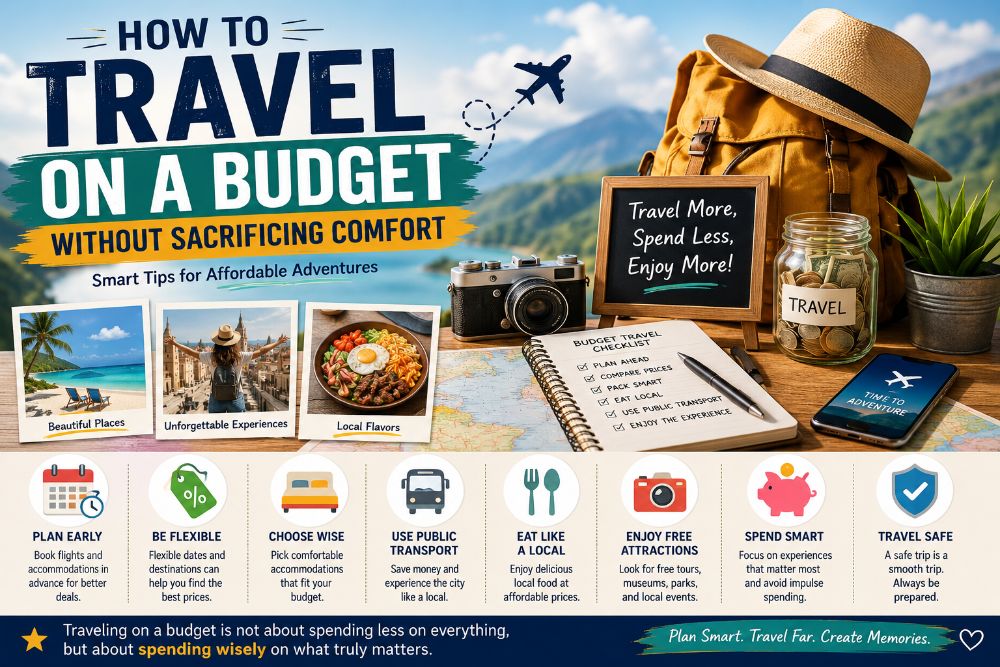
Many people assume that traveling comfortably requires a large budget. Luxury hotels, expensive flights, and premium experiences often dominate social media, creating the impression that memorable travel is only for those willing to spend heavily.
The reality is quite different.
With smart planning and informed decisions, it is entirely possible to travel on a budget without sacrificing comfort. In fact, many experienced travelers have learned that spending wisely often leads to a more authentic and enjoyable experience than simply spending more money.
Whether you are planning a weekend getaway, a family vacation, or an international adventure, these practical tips will help you maximize your travel budget while maintaining comfort and convenience.
Why Budget Travel Doesn’t Mean Cheap Travel
Budget travel is often misunderstood. It does not mean staying in uncomfortable accommodations, skipping meals, or avoiding attractions.Instead, budget travel focuses on getting the best value for your money.
Smart travelers prioritize:
- Comfortable accommodations at reasonable prices
- Affordable transportation options
- Meaningful experiences over unnecessary expenses
- Strategic planning and booking
- Efficient use of travel resources
The goal is simple: spend less on things that do not matter and more on experiences that do.
Plan Your Trip Early
One of the easiest ways to save money while maintaining comfort is to plan ahead.
Booking flights and accommodations early often provides access to lower prices and better choices.
Benefits of early planning include:
- Lower airfare
- Better hotel selection
- More flexible travel dates
- Reduced last-minute stress
- Greater access to discounts
For international trips, booking two to four months in advance often provides the best balance between price and availability.
Proper planning is one of the most effective ways to reduce travel costs. Before booking anything, consider reading our guide on How to Create the Perfect Travel Itinerary to organize your trip efficiently.
If this is your first overseas adventure, our guide on How to Plan an International Trip for the First Time can help you avoid common beginner mistakes.
Travel During Shoulder Seasons
Many travelers automatically choose peak vacation periods, resulting in higher prices and larger crowds.
Instead, consider traveling during shoulder seasons, which fall between peak and off-peak travel periods.
Advantages include:
- Lower hotel rates
- More affordable flights
- Shorter attraction lines
- Better availability
- More relaxed travel experiences
For example, visiting Europe in spring or autumn can provide excellent weather while avoiding the expensive summer crowds.
Be Flexible With Flight Options
Airfare often represents a significant portion of travel expenses.
To reduce costs:
Compare Multiple Airports
You May Also Like


Flying into a nearby airport can sometimes save hundreds of dollars.
Use Flexible Date Searches
Traveling one or two days earlier or later can dramatically reduce ticket prices.
Book Midweek Flights
Tuesdays, Wednesdays, and Thursdays are often cheaper than weekends.
Travel Light
Avoiding checked baggage fees can significantly lower overall travel costs.
A few minutes of flight comparison can result in substantial savings.
Choose Comfortable Budget-Friendly Accommodation
Comfort does not always require a five-star hotel.
Many alternatives offer excellent value, including:
Boutique Hotels
Often provide personalized service at lower rates.
Vacation Rentals
Ideal for families or longer stays.
Guesthouses
Offer local experiences and comfortable amenities.
Business Hotels
Frequently provide clean rooms, reliable Wi-Fi, and excellent locations.
Before booking, prioritize:
- Cleanliness
- Location
- Guest reviews
- SafetyTransportation access
A well-located three-star hotel can often provide a better experience than an expensive luxury property far from major attractions.
If you’re looking for unique stays that offer memorable experiences, check out our article about Unique Hotels Around the World.
Stay Near Major Attractions
Many travelers focus solely on room rates and forget about transportation costs.
A slightly more expensive hotel in a central location can actually save money by reducing:
- Taxi expenses
- Public transportation costs
- Travel time
- Daily commuting stress
Walking to attractions is often both economical and enjoyable.
Use Public Transportation
Public transportation is one of the best ways to save money while exploring a destination like a local.
Options may include:
- Metro systems
- Buses
- Trams
- Trains
- Ferries
Many cities offer tourist transportation passes that provide unlimited rides for several days.
Besides reducing expenses, public transportation often provides a more authentic travel experience.
Eat Like a Local
Dining costs can quickly consume a travel budget.
Instead of eating exclusively in tourist districts, explore local restaurants and neighborhood cafés.
Benefits include:
- Lower prices
- Better food quality
- Authentic cultural experiences
- Unique local specialties
Popular strategies include:
Enjoy Local Breakfasts
Many local bakeries and cafés offer affordable morning meals.
Eat Lunch Instead of Dinner at Expensive Restaurants
Lunch menus are often significantly cheaper.
Visit Local Markets
Fresh food markets offer affordable and delicious options.
Trying local cuisine often becomes one of the most memorable parts of any trip.
Take Advantage of Free Attractions
Many destinations offer incredible experiences that cost little or nothing.
Examples include:
- Public parks
- Beaches
- Historic districts
- Hiking trails
- Museums with free admission days
- Local festivals
- Scenic viewpoints
Researching free attractions before your trip can significantly reduce entertainment expenses.
Use Travel Rewards and Loyalty Programs
Frequent travelers can save substantial amounts through:
- Airline loyalty programs
- Hotel reward programs
- Travel credit card points
- Cashback offers
Even occasional travelers can benefit from collecting points and rewards for future trips.
Over time, these programs may provide free flights, hotel stays, or travel upgrades.
Pack Smart and Avoid Extra Costs
Overpacking often leads to unnecessary expenses.
A carefully planned packing list helps avoid:
- Airline baggage fees
- Emergency purchases
- Excess luggage charges
Essential items include:
- Comfortable walking shoes
- Weather-appropriate clothing
- Portable charger
- Reusable water bottle
- Travel documents
- Basic medications
Packing efficiently keeps travel simpler and more affordable.
Packing efficiently can help you avoid baggage fees and unnecessary expenses. Check out our Ultimate Travel Packing Checklist before your next trip.
Avoid Common Tourist Traps
Many popular tourist areas feature overpriced restaurants, souvenirs, and services.
Before purchasing anything:
- Compare prices
- Read reviews
- Ask locals for recommendations
- Walk a few blocks away from major attractions
Often, better value can be found just outside the busiest tourist zones.
Balance Comfort and Savings
Budget travel should never feel like a sacrifice.A useful strategy is identifying what matters most to you.
For example:
If comfortable sleep is important, spend more on accommodation and save on transportation.
If food is your priority, allocate a larger dining budget while choosing affordable lodging.
The key is spending intentionally rather than spending indiscriminately.
Sample Budget Breakdown
Here is an example of how a traveler can balance comfort and affordability on a one-week trip:
Flights 25% of budget
Accommodation 35% of budget
Food and Drinks 20% of budget
Transportation 10% of budget
Activities and Attractions 10% of budget
This structure can be adjusted depending on destination and travel style.
Common Budget Travel Mistakes
Avoid these frequent errors:
Waiting Too Long to Book
Prices often increase closer to departure dates.
Choosing the Cheapest Option Every Time
The lowest price does not always provide the best value.
Ignoring Hidden Fees
Check baggage charges, resort fees, and transportation costs.
Overplanning Activities
Trying to do too much often leads to unnecessary spending.
Not Researching Local Costs
Understanding average prices helps prevent overspending.
Awareness of these mistakes can save both money and frustration.
Many travelers unknowingly make costly mistakes that affect their overall experience. Learn how to avoid them in our article about Common Travel Mistakes and How to Avoid Them.
Final Thoughts
Traveling comfortably does not require an unlimited budget. By planning ahead, making informed choices, and focusing on value rather than luxury, you can enjoy incredible experiences without overspending.
The most memorable travel moments often come from discovering local culture, exploring beautiful destinations, and creating meaningful experiences—not from how much money was spent.
Whether you’re preparing for your first trip abroad or planning your next vacation, these budget travel strategies can help you save money while enjoying a comfortable, rewarding, and unforgettable adventure.
After planning your budget, creating an itinerary, and preparing your packing list, you’ll be ready to enjoy a stress-free adventure while making the most of every dollar spent.
Remember: smart travel is not about spending less—it is about spending wisely.