
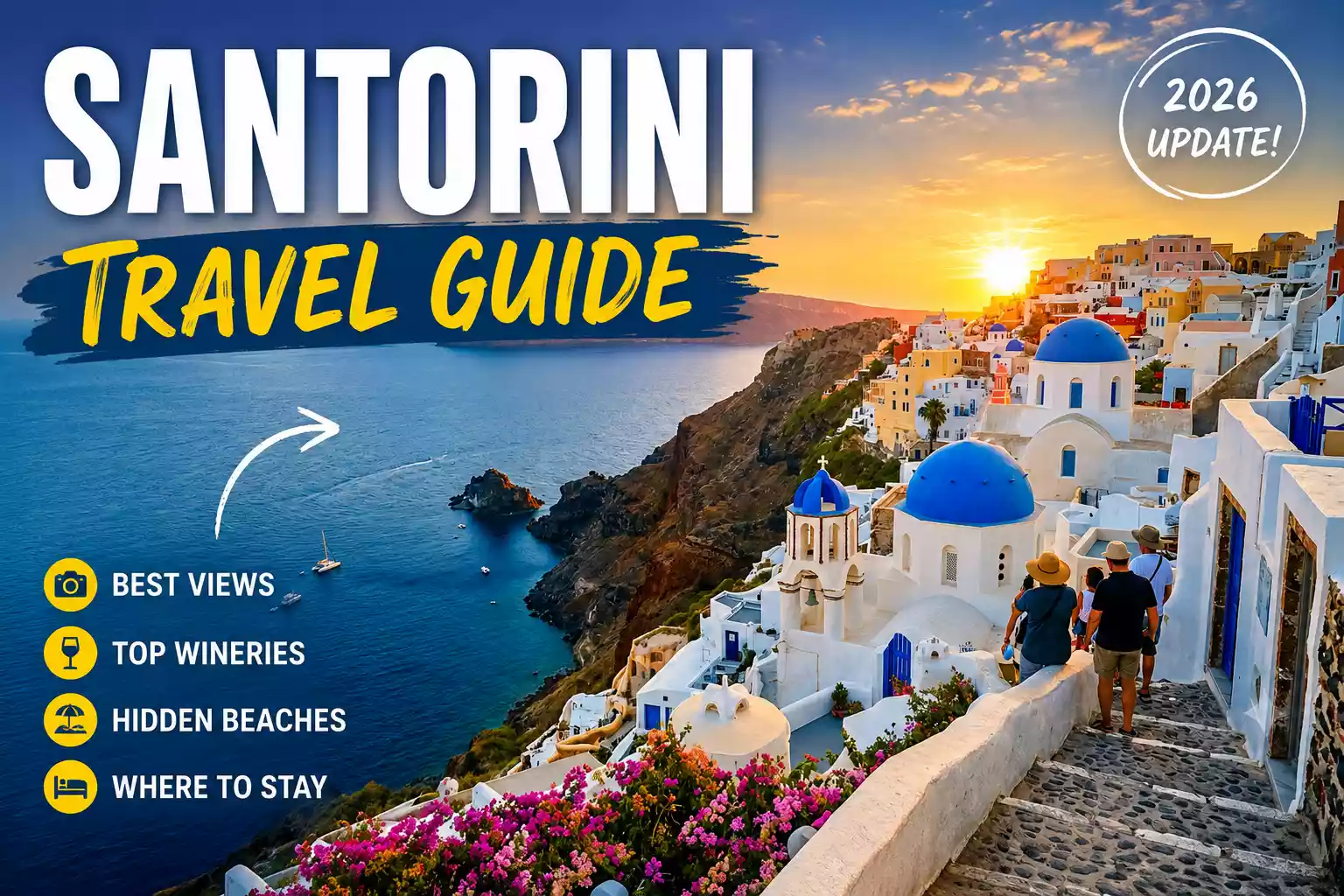
The caldera villages, the volcanic beaches, the Assyrtiko wine, and what visiting Santorini in 2026 actually looks like — including the parts no brochure mentions.
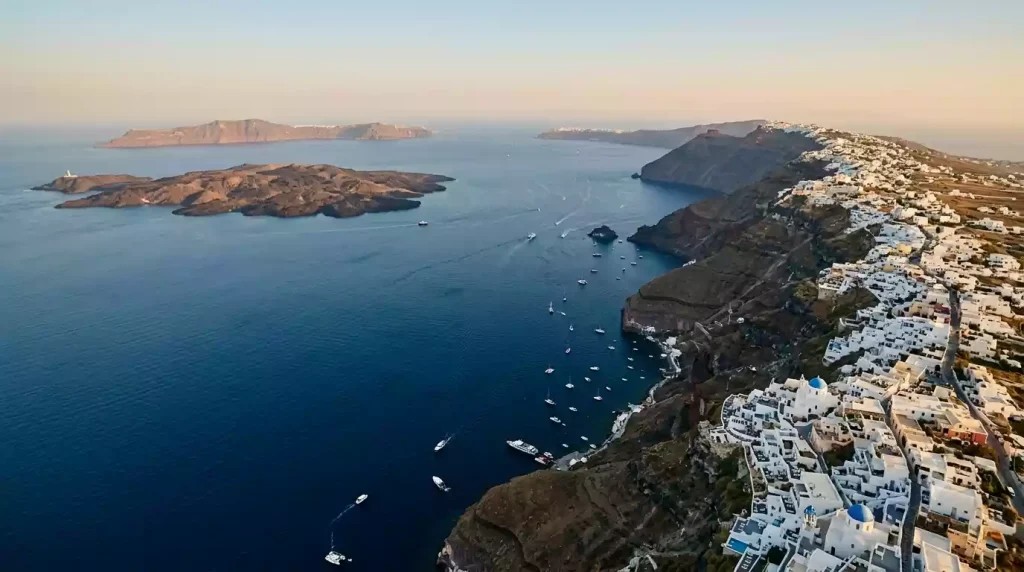
Santorini’s reputation arrives before you do. The whitewashed Cycladic buildings, the blue-domed churches, the caldera dropping away to the Aegean — it’s one of the most reproduced images in travel. The risk with somewhere this photographed is that the reality disappoints. Santorini doesn’t. But it surprises in ways the photography never quite communicates: the scale of the cliffs, the crowd density in July and August, and the way the light at 7pm turns the caldera into something a camera consistently undersells.
This isn’t another article about why Santorini is beautiful. It’s the practical guide for the trip itself — when to go, where to stay, what’s actually worth doing, how to manage the summer crowds, and what the island feels like once the cruise ships leave for the day.
In short: Santorini is the remnant of a volcanic caldera that collapsed roughly 3,600 years ago, forming a crescent-shaped island in Greece’s Cyclades archipelago. Its cliffside villages — Oia and Fira chief among them — sit 300 to 400 meters above the Aegean, which is the source of nearly everything the island is visited for.
For a closer look at where to stay once you’re on the island, see our Grace Hotel Santorini Review. For how Santorini compares to other honeymoon destinations globally, see Best Honeymoon Destinations in the World.
Santorini at a Glance
| Detail | Info |
|---|---|
| Location | Cyclades, South Aegean, Greece |
| Formation | Volcanic caldera collapse (~1600 BCE) |
| Main Villages | Oia, Fira, Imerovigli, Firostefani |
| Best For | Honeymoon, couples, photography, wine |
| Best Season | May–June / September–October |
| Peak Season | July–August (most crowded) |
| Airport | Santorini (JTR) — 45 minutes from Athens |
| Ferry | Piraeus ~8 hours, Mykonos ~3 hours |
| Currency | Euro (€) |
| Signature Wine | Assyrtiko (white, volcanic terroir) |
Understanding Santorini’s Geography
The Caldera — What It Actually Is
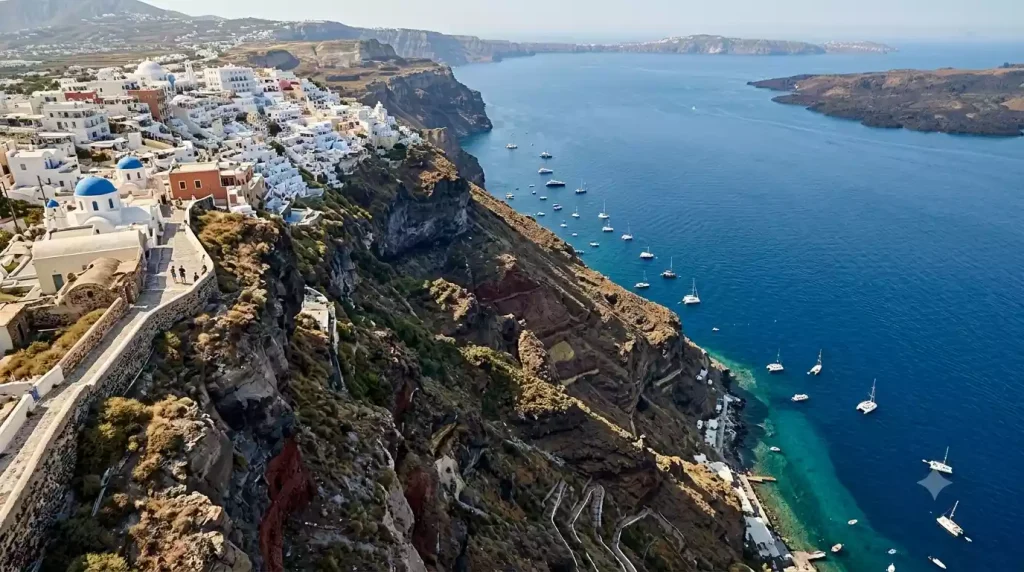
Santorini isn’t really one island — it’s what’s left of a volcanic caldera that collapsed about 3,600 years ago, leaving a crescent-shaped main island (Thira) alongside the smaller Therasia and Aspronisi, with a flooded caldera lagoon at the center. The cliffs drop 300 to 400 meters into the Aegean directly below the villages of Oia and Fira, and that drop is the single geographic fact responsible for almost every photograph the island is known online for.
The Villages — Which One to Stay In
Along the caldera rim sit Oia at the northern tip (the most photographed, the most expensive), Imerovigli in the middle (the highest elevation, the quietest), Firostefani (a calmer buffer between Imerovigli and Fira), and Fira itself, the capital — busiest, most walkable, best connected. On the island’s eastern, non-caldera side are Perissa, Kamari, and Pyrgos, each a different kind of escape from the cliff-edge crowds.
| Village | Character | Best For | Crowd Level | Price |
|---|---|---|---|---|
| Oia | Most iconic, photogenic | Photography, honeymoon | Very high (Jul–Aug) | $$$$$ |
| Imerovigli | Highest elevation, quietest caldera village | Couples, seclusion | Moderate | $$$$ |
| Firostefani | Between Oia and Fira in character | Value caldera view | Moderate | $$$ |
| Fira | Capital, nightlife, transport hub | First-timers, solo travelers | Very high | $$$ |
| Pyrgos | Medieval hilltop, inland | Authenticity, wine | Low | $$ |
| Perissa | Black sand beach, casual | Beach-focused, budget | Moderate | $$ |
Best Time to Visit Santorini
Shoulder Season — May, June, September, October (Recommended)
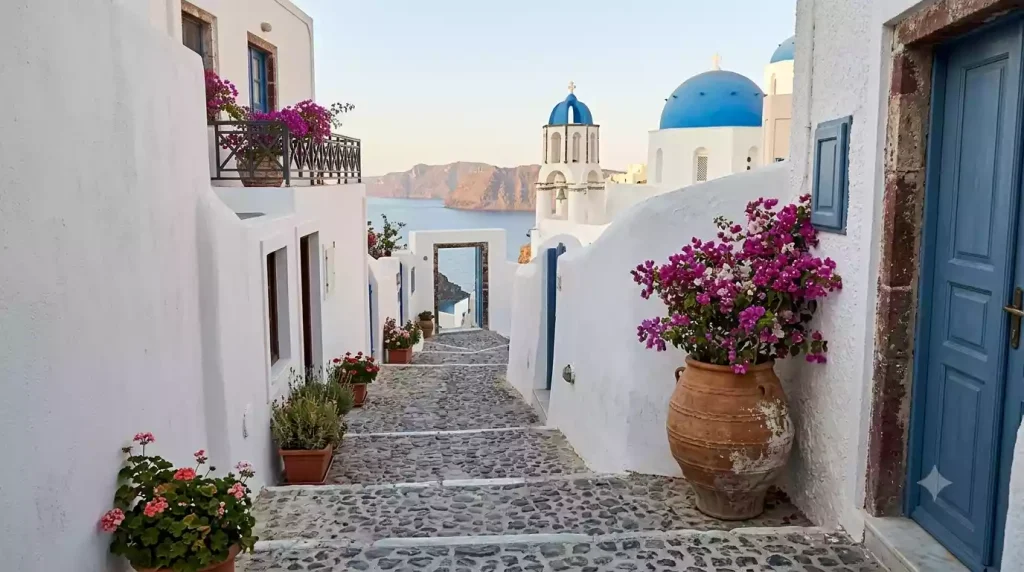
This is the window most repeat visitors quietly steer people toward. Weather runs a comfortable 25–28°C, the caldera is just as photogenic, cruise-ship day-trippers thin out considerably, hotel rates drop 20–40% below peak, and it’s still possible to get a restaurant table without booking months in advance.
Peak Season — July and August (An Honest Assessment)
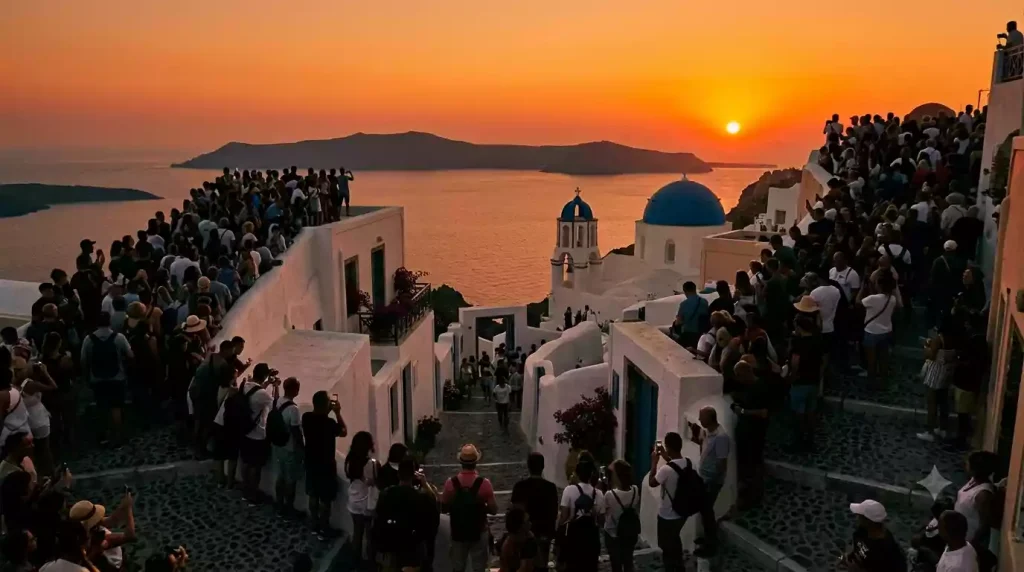
Worth knowing before you book: Oia at sunset can have 2,000-plus people waiting for the same photograph. Cruise ships from Mykonos and Athens add 8,000 to 10,000 day-trippers to an island that’s 18 kilometers long. Temperatures push 32–35°C, restaurants are booked out weeks ahead, and ferry terminals get genuinely congested. None of this makes Santorini not worth visiting in summer — it just changes what the day actually feels like.
Off-Season — November to April
The island scales down significantly — plenty of hotels, restaurants, and shops close entirely. What’s left is dramatic light and storm-cloud photography with a fraction of the crowds, though the experience is more limited. Worth considering only for travelers specifically chasing solitude over amenities.
Getting to Santorini
Flying — Athens and Direct International Routes
Santorini Airport (JTR) takes direct flights from Athens (45 minutes, multiple times daily) and, in summer, direct routes from London, Amsterdam, Frankfurt, and Zurich. Those international direct routes run April through October only — outside that window, a connection through Athens is required. The airport itself is small and basic, so arriving early for peak-season flights isn’t a bad habit.
Ferry from Athens (Piraeus)
The overnight ferry from Piraeus takes about 8 hours, and waking up as the boat approaches the caldera is its own kind of arrival experience. A high-speed option covers the same route in roughly 5 hours. Blue Star Ferries and SeaJets both run regular service — booking ahead for peak season is strongly advised.
Ferry from Other Cyclades Islands
Mykonos to Santorini runs about 3 hours; Crete (Heraklion) to Santorini about 2 hours on the high-speed line. Island-hopping itineraries combining Santorini, Mykonos, and Naxos are both popular and genuinely feasible given the ferry network.
Arriving at the Port — The Fira Funicular
Most ferries dock at Athinios Port, with bus or taxi transfers up to the villages. The Old Port beneath Fira, used mainly by cruise tenders and small boats, connects to town via a historic funicular or the 588-step donkey path. Donkey riding has become increasingly controversial on animal-welfare grounds — the funicular or a walk up are the better alternatives.
Planning the logistics? See How to Find Cheap Flights and Hotel Deals and How to Create the Perfect Travel Itinerary.
Where to Stay in Santorini
Cave Hotels — The Signature Santorini Format
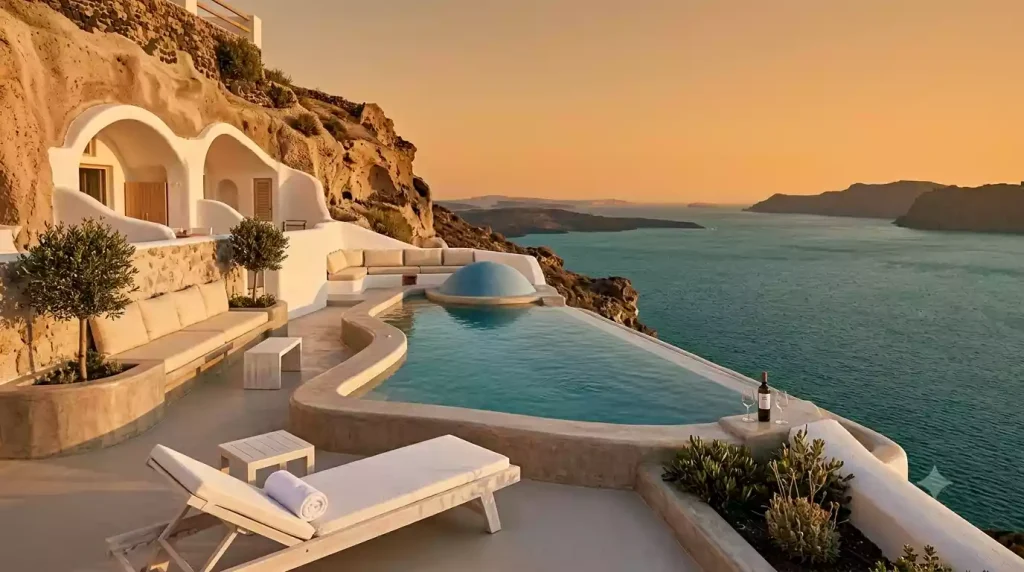
Cave hotels are carved directly into the volcanic pumice of the cliff face — naturally temperature-regulated, cooler in summer than a conventional build, with infinity pools that visually merge into the Aegean below. It’s the most distinctive accommodation format anywhere in the Mediterranean, and it’s the reason a Santorini stay reads so differently in photos than a standard beach hotel would.
Best Luxury Cave Hotels
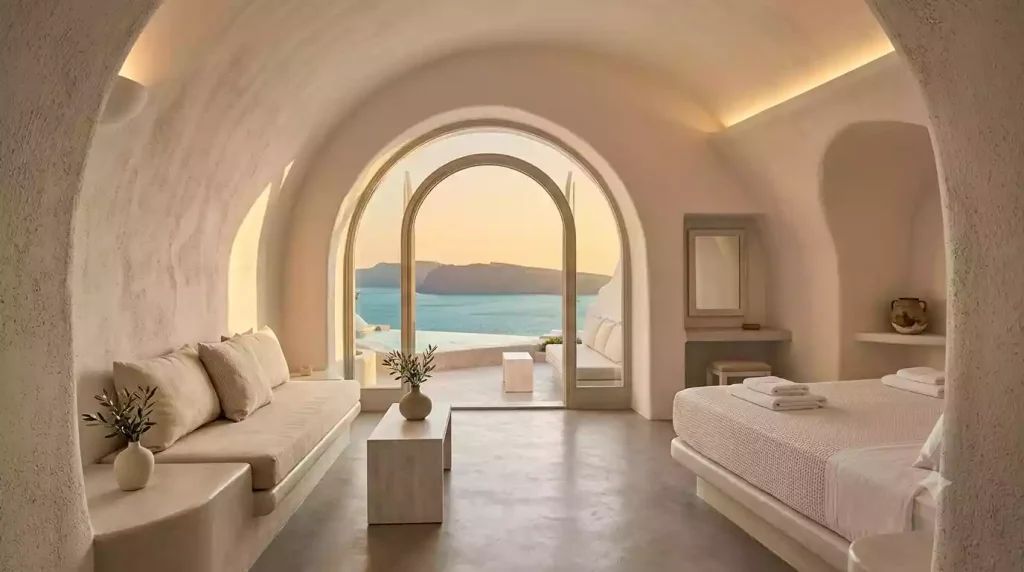
Grace Hotel Santorini, in Imerovigli, is the property most consistently cited as the island’s finest cave hotel — our full Grace Hotel Santorini Review covers it in detail. As a category, cave hotels run from around $300 a night up to $1,500-plus for caldera-facing suites in peak season.
Budget and Mid-Range Options
Perissa and Kamari, on the east coast, trade the caldera view for black-sand beach access and noticeably lower prices. Fira and Firostefani sit in between — caldera views without Oia’s price premium, and closer to the island’s transport hub.
| Tier | Location | Price From | Best For |
|---|---|---|---|
| Ultra-luxury cave hotel | Oia / Imerovigli | $800+/night | Honeymoon, caldera views |
| Luxury cave hotel | Fira / Firostefani | $400–$800/night | Caldera access, better value |
| Mid-range hotel | Fira / Firostefani | $200–$400/night | First-timers, budget-flexible |
| Budget | Perissa / Kamari | $80–$200/night | Beach-focused travelers |
Related reading: 10 Most Stunning Cliffside Hotels in the World
What to Do in Santorini
The Oia Sunset — How to Actually Experience It
This is the most-photographed sunset in the Mediterranean, and the practical reality is that the crowd starts building two hours beforehand. The better positions: a private hotel terrace (worth booking dinner early or staying at the property itself), Ammoudi Bay just below Oia, or one of the less-obvious viewpoints near Imerovigli. It’s worth doing — it’s also worth planning around rather than showing up for at the last minute.
You May Also Like




Akrotiri — The Minoan Archaeological Site
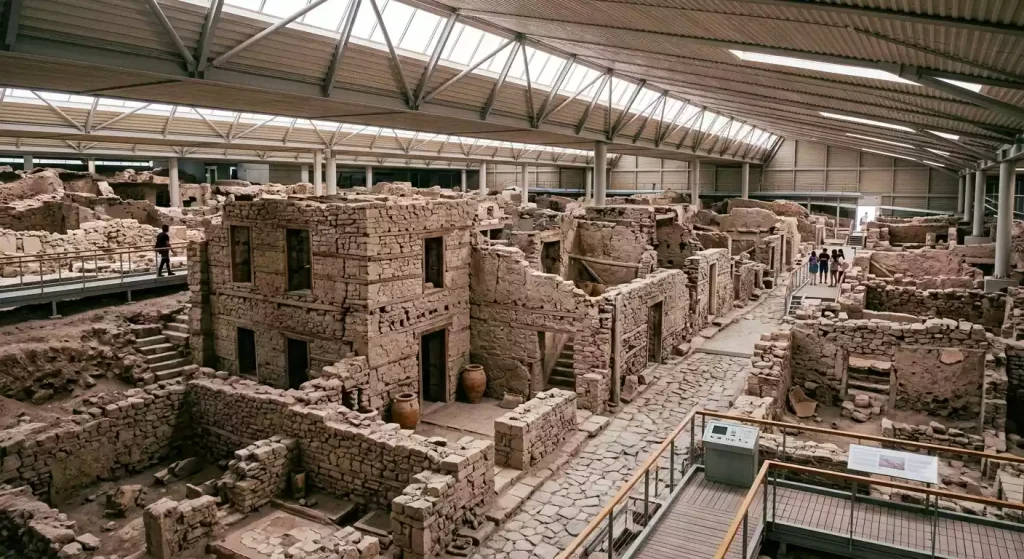
Santorini’s least-visited highlight is also one of its best: the Minoan city of Akrotiri, buried by the same volcanic eruption around 1600 BCE, is one of the best-preserved prehistoric settlements anywhere. Multi-story buildings, painted frescoes, and an advanced drainage system make it a genuine rival to Pompeii for completeness — with a fraction of the visitors.
Assyrtiko Wine — Santorini’s Volcanic Terroir
The island’s volcanic soil produces Assyrtiko, a bone-dry white with high acidity and a mineral complexity that doesn’t really replicate anywhere else. Santorini’s wine region is among the oldest continuously cultivated in the world, and Domaine Sigalas, Estate Argyros, and Gaia Wines are the benchmark producers. A half-day wine tour through the vineyards around Pyrgos and Megalochori is consistently one of the better-spent afternoons on the island.
Volcanic Beaches — Black, Red, and White
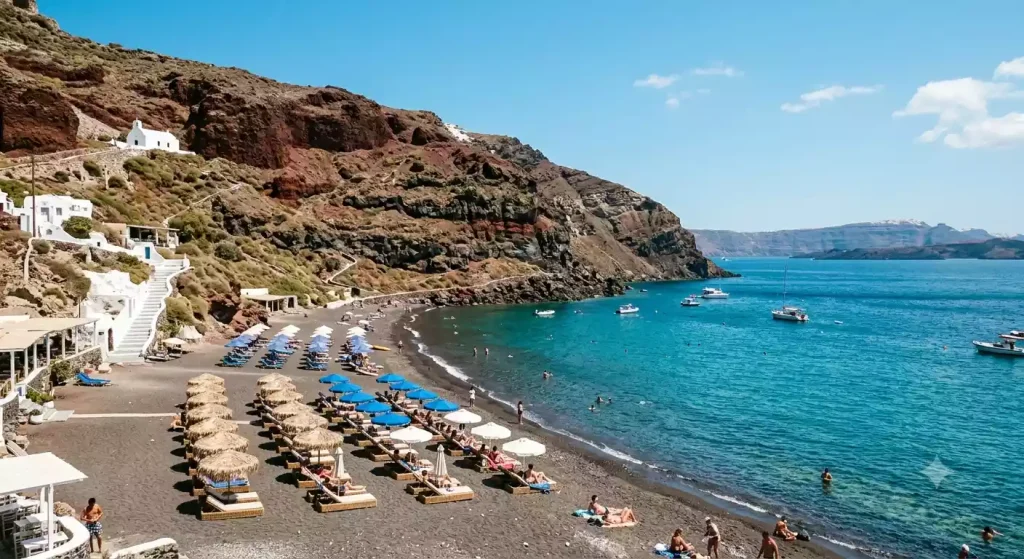
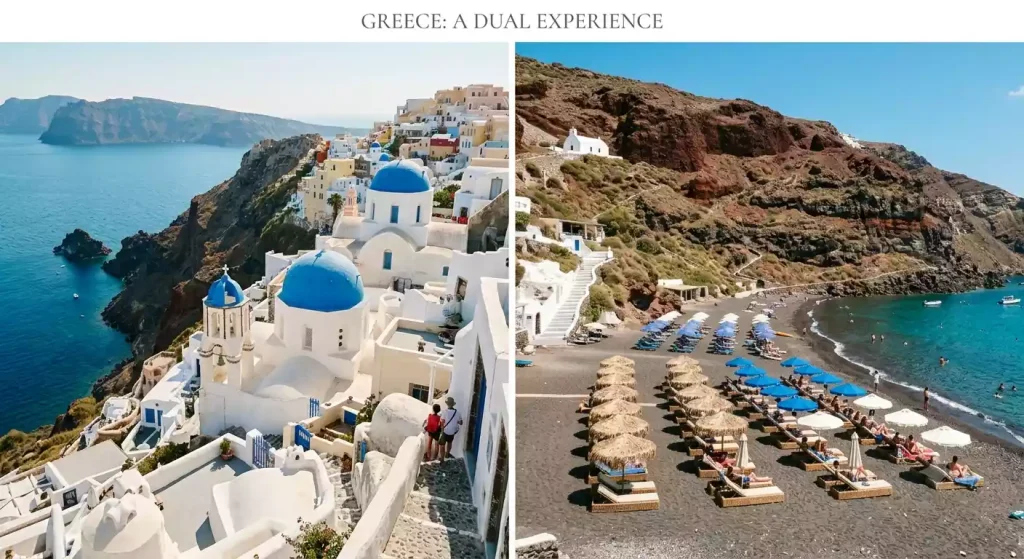
The island’s geology produces three distinct beach colors: Perissa and Perivolos have the longest stretches of black volcanic sand, Red Beach near Akrotiri has dramatic red cliffs and a small, crowded shoreline, and White Beach — accessible only by boat — has the most striking scenery of the three. Black sand heats up fast; beach shoes are worth packing rather than improvising.
The Volcano — Nea Kameni
A boat tour from Fira or Oia out to Nea Kameni, the active volcanic island at the caldera’s center, includes a hike up the crater and a swim in the warm sulphuric springs at nearby Palea Kameni. The 2–3 hour tour is the clearest way to understand the geology that put the island in this shape in the first place.
Boat Tours and Sailing
Catamaran sunset cruises and sailing tours around the caldera are the island’s most popular activity after sunset-watching itself, with private sailboat charters available for smaller groups. Seeing the caldera from water level is a genuinely different perspective from the cliff-top view everyone photographs.
What to Eat and Drink in Santorini
The Local Food Scene

The volcanic soil produces cherry tomatoes with a concentrated flavor that doesn’t really exist off the island, along with a PDO-protected fava bean variety unique to Santorini, fresh seafood from the fishing boats at Ammoudi Bay, and white eggplant. Eating at Ammoudi Bay itself — where the seafood restaurants sit literally at the water’s edge below Oia — is the closest thing to a defining meal here.
Assyrtiko and the Wine Culture
Most wineries offer flights that pair Assyrtiko against Santorini’s other volcanic varieties — Athiri and Aidani among them. Santo Wines, perched above the caldera, pairs its tasting with a sunset panorama that’s arguably as good as anything in Oia, minus the crowd.
Restaurants — Where to Actually Eat
Oia’s restaurants carry a real premium for the view. Fira offers better value without sacrificing much. Pyrgos, inland, is where the tourist markup mostly disappears and the food gets more genuinely local.
Santorini vs. Mykonos — Choosing Between the Two
| Factor | Santorini | Mykonos |
|---|---|---|
| Scenery | Caldera, volcanic, dramatic | Windmills, Aegean blue, beaches |
| Vibe | Romantic, couples-focused | Party, nightlife, social |
| Best For | Honeymoon, photography, wine | Beach clubs, social scene |
| Beaches | Black/red volcanic, small | Sandy, multiple beach clubs |
| Food | Local Cycladic, wine-focused | International, party-adjacent |
| Price | High (caldera hotels) | Very high (peak season) |
See also: Best Honeymoon Destinations in the World
Practical Information
Getting Around the Island
Santorini is small — 18km by 12km — which makes ATV rental the most popular way to get around, though the accident rate is real and the roads are narrow and steep. A rental car is the more practical option for anyone planning to cover the whole island. The public KTEL bus connects the main villages for under €2 a ride, and taxis exist but can get stuck in peak-season congestion.
How Much Does Santorini Cost?
Mid-range meals run $20–40 per person; fine dining with a caldera view runs $80–150. A volcano boat tour costs around €30, and wine tastings run €25–50. Combined with the accommodation tiers above, a realistic mid-range daily budget for a couple — hotel, meals, and one activity — lands somewhere between $300 and $500 outside peak season.
What to Pack
Light summer clothing, genuinely sturdy walking shoes (the caldera villages are all steps, and wheeled luggage is a real liability), sun protection, reef-safe sunscreen for the Red Beach area, and a light layer for evenings — the sea breeze at the caldera edge gets cool even in peak summer. For a fuller packing breakdown, see our Ultimate Travel Packing Checklist.
Santorini for Honeymoons and Romance
Santorini remains the Greek islands’ most celebrated honeymoon destination, and what actually makes it work is specific: caldera views from a private hotel terrace, sunset timing that’s almost theatrical in its consistency, cave-hotel privacy, and an Assyrtiko wine culture that feels genuinely celebratory rather than performative. The practical advice worth following — book a hotel with a private terrace rather than a shared viewing deck, secure a caldera-view dinner reservation three to four months out, and where possible, plan the trip outside peak season.
Related reading: Grace Hotel Santorini Review, Best Honeymoon Destinations in the World, and Monastero Santa Rosa, Amalfi Coast for a European honeymoon alternative.
Pros and Cons of Visiting Santorini
Pros:
- The caldera view genuinely delivers on the photography, at any time of day
- Assyrtiko wine and volcanic terroir cuisine are unlike anywhere else in Greece
- Akrotiri offers Bronze Age history most visitors somehow skip entirely
- Cave hotels are a genuinely distinctive accommodation format, not a gimmick
- Easy to combine with Mykonos, Naxos, or Crete via ferry
Cons:
- July–August crowds at Oia sunset can undermine the entire experience
- Cave-hotel caldera rooms carry a real price premium over the rest of Greece
- Steps and steep paths make the caldera villages difficult for limited mobility
- Beaches are volcanic sand and pebble, not the soft-sand experience some expect
Who Santorini Is For
- Honeymooners and couples — the caldera view and cave-hotel privacy are built for exactly this
- Wine and food travelers — Assyrtiko and the volcanic-soil produce aren’t replicated elsewhere
- Photographers — few places reward a good eye and patient timing as consistently
Less suited to: families with young children (given the cliffside drop-offs), travelers wanting a soft-sand beach holiday, and anyone visiting July–August who isn’t prepared to plan around the crowds.
Santorini Travel Guide — Quick Rating
⭐ Plishere Rating
| Scenery | ★★★★★ (5.0/5) |
| Romance & Honeymoon | ★★★★★ (5.0/5) |
| Food & Wine | ★★★★☆ (4.5/5) |
| Activities | ★★★★☆ (4.5/5) |
| Value for Money | ★★★☆☆ (3.5/5) |
| Family Friendly | ★★★☆☆ (3.0/5) |
| Overall Rating | ★★★★★ 4.6 / 5 |
Verdict: Santorini remains one of the world’s most rewarding destinations for honeymooners, photographers, and luxury travelers. While peak-season crowds can be overwhelming, visiting during the shoulder season delivers spectacular caldera views, exceptional volcanic wine, and unforgettable sunsets with a much better overall experience.
How We Evaluated This Guide
This guide is built around seven consistent criteria: location (the caldera’s geography and how it shapes every village on the rim), accommodation quality (cave hotels versus standard properties, and where the real price premiums sit), dining (the local, volcanic-soil-driven food scene against tourist-facing options), service (what’s realistic to expect at each accommodation tier), facilities (transport, ferries, and getting around the island itself), guest experience (what a day in Oia during peak season actually feels like versus shoulder season), and value for money (realistic daily budgets across the accommodation and dining tiers above).
Frequently Asked Questions
When is the best time to visit Santorini?
May–June and September–October. Best weather at 25–28°C, fewer crowds than the July–August peak, and hotel rates 20–40% lower. January–February has minimal crowds but many tourist facilities are closed.
How do I get to Santorini?
Fly direct from Athens (45 minutes) or from major European hubs in summer. An overnight ferry from Piraeus (8 hours) offers a scenic arrival; a high-speed ferry covers the route in about 5 hours.
Which village in Santorini is best to stay in?
Oia for the most iconic caldera views and photography, though it’s the most crowded. Imerovigli for slightly more seclusion on the same clifftop. Fira for transport access and better affordability. Perissa or Kamari for a beach-focused stay.
Is Santorini worth visiting in July and August?
Yes, but expect real crowds — 2,000-plus people at Oia sunset, 8,000–10,000 cruise day-trippers daily, peak hotel rates, and the need to book restaurants well ahead. The shoulder-season experience is significantly more comfortable for most travelers.
What is the best hotel in Santorini?
Grace Hotel Santorini, in Imerovigli, consistently ranks as the island’s finest cave hotel, with an infinity pool carved directly into the caldera cliff.
How many days do you need in Santorini?
Three to five days is the practical range. Three covers the Oia sunset, Akrotiri, a wine tasting, a volcanic beach, and a boat tour. Five allows a more relaxed pace and a proper wine-region visit.
Is Santorini expensive?
Yes — among the priciest Greek islands. Caldera-view cave hotel rooms start around $400–800 a night in shoulder season and $800–1,500-plus at peak. Budget stays in Perissa or Kamari run $80–150 a night.
What food and wine should I try in Santorini?
Assyrtiko wine, Santorini’s uniquely intense cherry tomatoes, white eggplant, fava spread, and fresh seafood from Ammoudi Bay. A proper wine tasting at a caldera-view winery is close to essential.
Can you see the volcano in Santorini?
Yes — Nea Kameni, the active volcanic island at the caldera’s center, is reachable by boat tour from Fira or Oia, with hiking on the crater and a swim in the warm sulphuric springs nearby, typically 2–3 hours round trip.
Is Santorini better than Mykonos?
It depends on the trip. Santorini wins for dramatic scenery, honeymoons, wine culture, and photography. Mykonos wins for beach clubs, nightlife, and a more social scene.
What is the caldera in Santorini?
The caldera is the water-filled center of an ancient volcanic crater that collapsed roughly 3,600 years ago. The sheer cliffs on the island’s western edge — where Oia and Fira are built — form the caldera’s rim, dropping 300–400 meters to the Aegean below.
Is Santorini good for families with children?
Reasonably, but it isn’t the ideal choice. Cave hotels with caldera views come with drop-offs that require real vigilance around young children. Perissa, on the beach side, is more family-friendly, and most of the island’s ruins and viewpoints suit older children and teens better than toddlers.
Final Thoughts
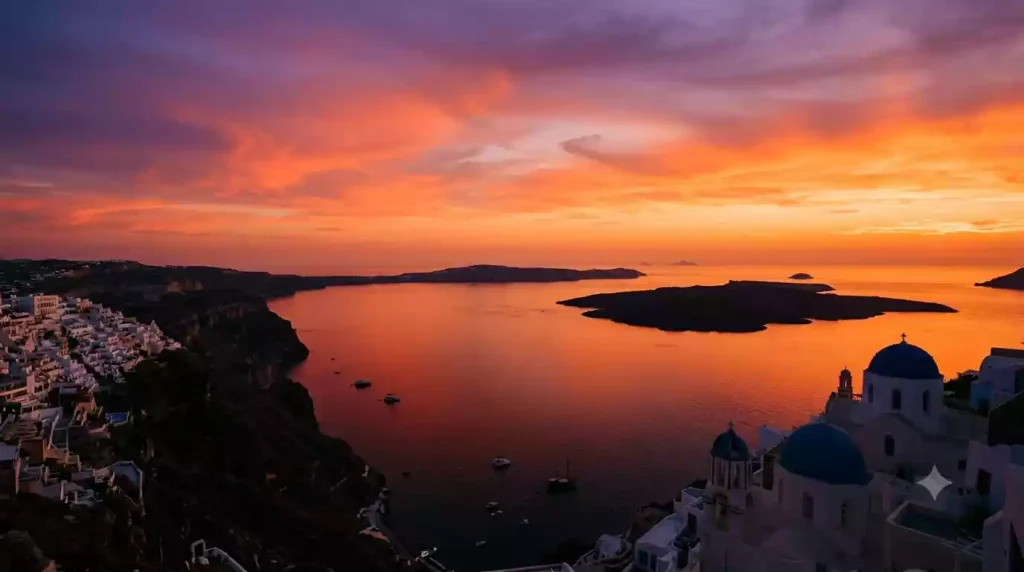
Santorini earns its reputation not despite the hype but alongside it. The caldera view at golden hour genuinely is what the photography suggests — and then some. The volcanic beaches don’t resemble anything else in the Mediterranean, the Assyrtiko is genuinely singular, and the ruins at Akrotiri are a Bronze Age site most visitors to the island somehow never make time for. It rewards the traveler who arrives in May or September, books a cave hotel with a private terrace, and treats the sunset as something to plan around rather than stumble into.