
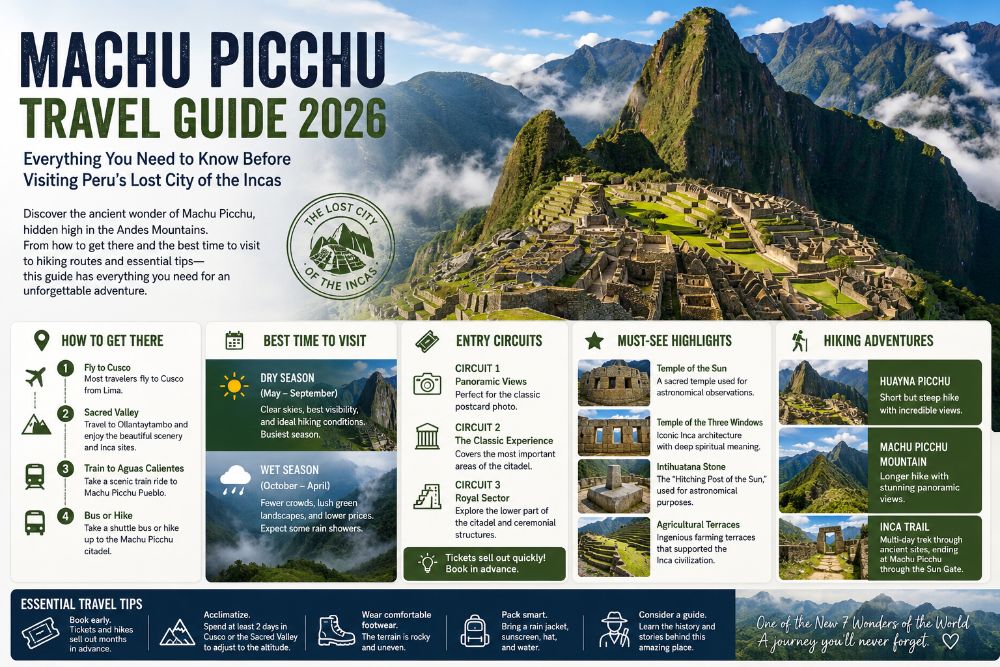
High in the misty Andes Mountains of Peru lies one of the most extraordinary archaeological treasures on Earth—Machu Picchu. Known as the Lost City of the Incas, this ancient citadel continues to captivate travelers from around the world with its breathtaking scenery, fascinating history, and mysterious origins.
Whether you are a history enthusiast, adventure seeker, photographer, or simply someone searching for a once-in-a-lifetime travel experience, Machu Picchu deserves a place at the top of your bucket list. Every stone, terrace, and temple tells a story of a remarkable civilization that flourished centuries ago in the heart of South America.
In this comprehensive Machu Picchu Travel Guide 2026, you’ll discover everything you need to know before planning your visit, from transportation and tickets to hiking routes and insider travel tips.
What Is Machu Picchu?
Machu Picchu is a 15th-century Incan citadel located approximately 2,430 meters (7,970 feet) above sea level in the Peruvian Andes. Built during the reign of the Inca emperor Pachacuti, the site remained hidden from the outside world for centuries until it gained international attention after being introduced to the global community in 1911. Today, it stands as one of the most important cultural landmarks in the world and is recognized as a UNESCO World Heritage Site.
Surrounded by dramatic mountain peaks, lush cloud forests, and winding valleys, Machu Picchu showcases the incredible engineering skills of the Inca civilization. Massive stone blocks were precisely fitted together without mortar, creating structures that have withstood earthquakes and harsh mountain conditions for hundreds of years.
Why Is Machu Picchu So Famous?
Machu Picchu is much more than an archaeological site. It represents the ingenuity, spirituality, and architectural brilliance of the Inca Empire.
Visitors are amazed by:
- Stunning mountain landscapes
- Ancient temples and ceremonial sites
- Sophisticated stone construction
- Rich cultural heritage
- Unique hiking experiences
- Spectacular photography opportunities
Its combination of natural beauty and historical significance has earned Machu Picchu a reputation as one of the New Seven Wonders of the World and one of the most visited attractions in South America.
How to Get to Machu Picchu
One of the reasons Machu Picchu feels so special is the journey required to reach it.
Step 1: Fly to Cusco
Most international travelers arrive in Lima before taking a domestic flight to Cusco, the former capital of the Inca Empire. Cusco serves as the primary gateway to Machu Picchu and offers visitors a chance to acclimatize to the high altitude.
Step 2: Travel Through the Sacred Valley
From Cusco, travelers usually continue to Ollantaytambo in the Sacred Valley. This region is filled with ancient ruins, colorful markets, and breathtaking mountain scenery.
Step 3: Take the Train to Aguas Calientes
The most popular way to reach Machu Picchu is by train from Ollantaytambo to Aguas Calientes, also known as Machu Picchu Pueblo. The train journey itself is unforgettable, passing through rivers, valleys, and dramatic Andean landscapes.
Step 4: Bus or Hike to the Citadel
From Aguas Calientes, visitors can either:
- Take a shuttle bus to the entrance
- Hike uphill for approximately 90 minutes
Both options offer memorable views of the surrounding mountains.
Best Time to Visit Machu Picchu
Machu Picchu can be visited year-round, but weather conditions vary significantly.
Dry Season (May to September)
The dry season is considered the best time to visit because of:
- Clear skies
- Better visibility
- Excellent hiking conditions
- Lower chance of rain
However, this is also the busiest period, meaning larger crowds and higher prices.
Wet Season (October to April)
During the rainy season, visitors can enjoy:
- Fewer tourists
- Greener landscapes
- Better hotel availability
Rain showers are common, but many travelers appreciate the quieter atmosphere and dramatic cloud-covered scenery.
Must-See Highlights Inside Machu Picchu
Temple of the Sun
One of the most significant religious structures in the citadel, believed to have been used for astronomical observations and sacred ceremonies.
You May Also Like




Temple of the Three Windows
This iconic structure features beautifully crafted stonework and is thought to symbolize important elements of Inca cosmology.
Sacred Plaza
A central gathering area surrounded by impressive religious and ceremonial buildings.
Intihuatana Stone
Often referred to as the “Hitching Post of the Sun,” this carved stone is believed to have played an important role in astronomical observations.
Agricultural Terraces
These terraces demonstrate the advanced agricultural techniques that allowed the Incas to thrive in the mountainous environment.
Hiking Adventures Around Machu Picchu
For travelers seeking extra adventure, several hiking options are available.
Huayna Picchu
The steep mountain visible behind the citadel in many photographs. The climb is challenging but rewards hikers with spectacular panoramic views.
Essential Travel Tips
To make the most of your trip, keep these recommendations in mind:
Book Early
Tickets frequently sell out months in advance, especially during peak travel seasons.
Arrive Acclimatized
Spend at least two days in Cusco or the Sacred Valley before visiting to reduce the effects of altitude sickness.
Wear Comfortable Footwear
The terrain includes uneven stone pathways, stairs, and steep inclines.
Bring Weather Protection
Conditions can change quickly in the mountains, so pack a lightweight rain jacket and sun protection.
Consider Hiring a Guide
A knowledgeable guide can provide valuable historical context and help you appreciate the deeper significance of the site. Many visitors find that guided tours greatly enhance their experience.
Responsible Tourism at Machu Picchu
Machu Picchu faces ongoing challenges related to conservation and visitor management. Authorities continue to implement regulations designed to protect the site’s fragile structures and cultural importance for future generations. Travelers are encouraged to follow all rules, stay on designated paths, and support sustainable tourism practices.
Final Thoughts
Visiting Machu Picchu is more than a vacation—it is a journey into one of humanity’s most fascinating civilizations. Standing among the ancient stone walls while gazing across the mist-covered Andes creates a feeling that few destinations in the world can match.
From its mysterious origins and remarkable architecture to its stunning mountain landscapes, Machu Picchu offers an unforgettable experience for every traveler. Whether you arrive by train, hike the legendary Inca Trail, or explore the Sacred Valley before reaching the citadel, the memories you create here will stay with you forever.
If Peru is on your travel wish list for 2026, make sure Machu Picchu is at the very top. It is not just a destination—it is one of the world’s greatest adventures waiting to be discovered.