
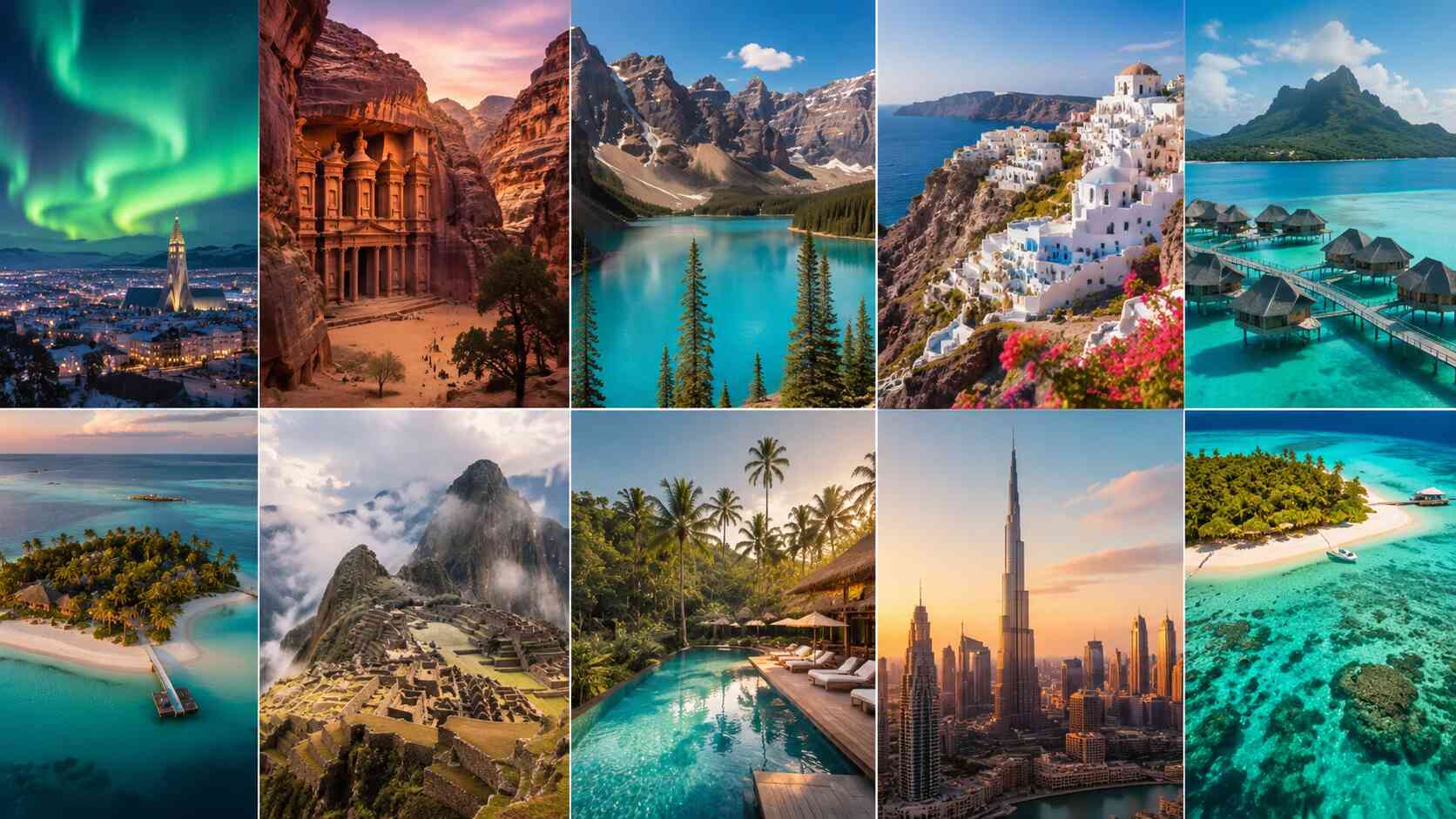
Some trips you plan. Others you dream about for years before you finally go. The destinations on this list fall firmly into the second category — places that stop you mid-scroll, places that end up on your phone’s wallpaper, places you find yourself describing to other people at dinner parties before you’ve even booked a flight.
This is not a list of the most popular destinations in the world. Popular is Bali in August, Times Square on New Year’s Eve, the Amalfi Coast in July. This is a list of the ten destinations that genuinely deserve to be on your travel bucket list — places that combine extraordinary landscapes, exceptional hotels, and experiences you simply cannot replicate anywhere else. Whether you’re planning a honeymoon, a milestone trip, or just finally making good on a promise you made to yourself five years ago, this is where to start.
1. Tromsø, Norway — Chasing the Northern Lights
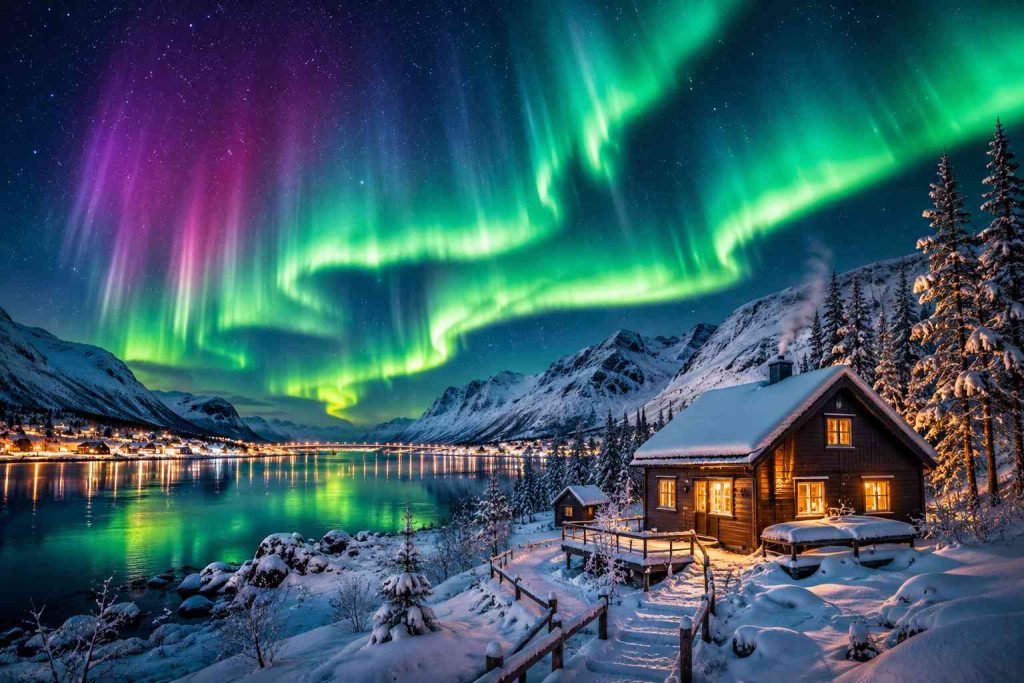
There are things in travel that photographs cannot prepare you for, and the Northern Lights over the Arctic is chief among them. Tromsø, a small city of about 75,000 people sitting well above the Arctic Circle in northern Norway, is one of the world’s best places to witness the aurora borealis — and one of the most accessible. Unlike more remote viewing locations, Tromsø has direct flights from major European hubs, excellent hotels, and a genuine city culture to explore between clear nights.
The Northern Lights season runs from late September through March, with the darkest months of November and December offering the longest windows for viewing. Peak activity tends to come in waves — some nights the sky does nothing, others it erupts in ribbons of green, violet, and white that move faster than you’d expect. Most travelers book guided tours into the countryside away from city light, often combining aurora hunting with snowshoeing, reindeer sled rides, and traditional Sami cultural experiences.
Beyond the lights, Tromsø offers whale watching in the winter fjords, dog sledding, and some of Norway’s best seafood. In summer, the midnight sun flips the experience entirely — endless daylight and hiking season in the mountains above the city.
Best time to visit: October–February for Northern Lights; June–August for midnight sun.
Best for: Couples, nature seekers, bucket list travelers.
Where to stay: Tromsø has excellent mid-range and boutique hotel options; for the ultimate experience, look at glass-roofed cabins outside the city for in-room aurora viewing.
2. Petra, Jordan — The Ancient City Carved in Stone
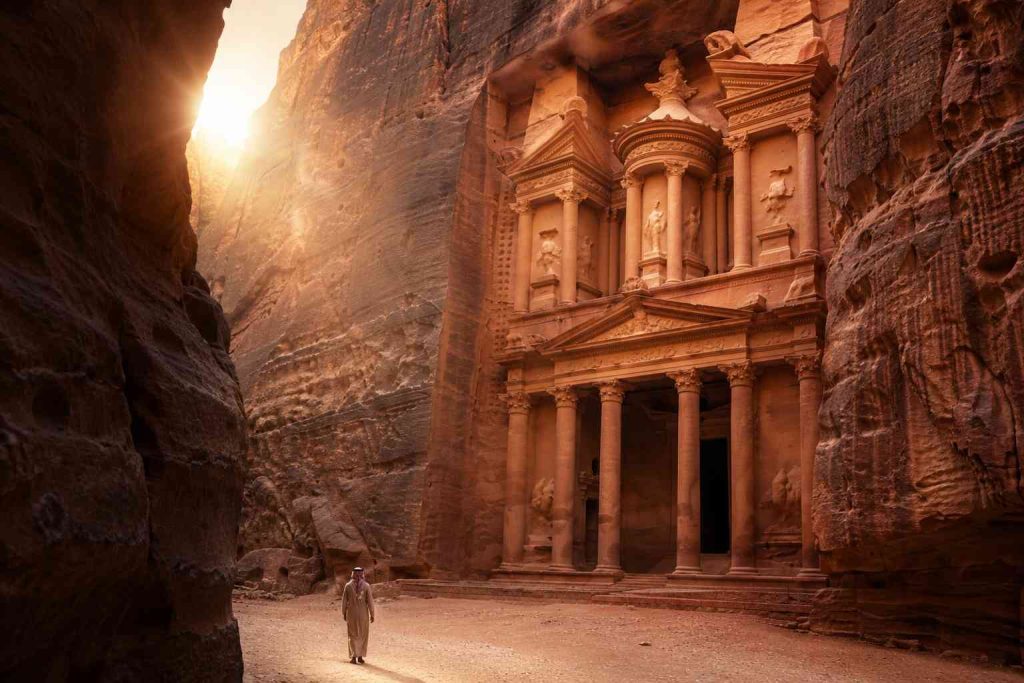
No photograph of Petra is quite honest. The images you’ve seen — the rose-red Treasury emerging from a narrow canyon slot, perfectly framed — are real, but they don’t tell you about the scale. Petra is enormous. The Treasury (Al-Khazneh) that appears on every postcard is just the entrance. Beyond it lies an entire ancient city: colonnaded streets, a Roman amphitheatre, royal tombs carved directly into cliff faces, and a high place of sacrifice accessible only by a steep climb with views over the entire valley.
The Nabataean people built Petra over centuries, beginning around the 4th century BC. They were master engineers — the city’s water collection system is still studied today — and master stone-carvers, producing a series of facades that have survived millennia of desert wind and sun. Walking through the Siq (the narrow entrance gorge) toward the Treasury at first light, before the crowds arrive, is one of the most cinematic moments in all of travel.
Jordan as a whole rewards the traveler who digs deeper: Wadi Rum’s alien desert landscape, the Dead Sea’s surreal floatability, and the warm hospitality of Jordanian culture make it one of the Middle East’s most compelling destinations.
Best time to visit: March–May and September–November (avoid summer heat).
Best for: History lovers, photographers, adventure travelers.
Tip: Arrive at opening time (6am) and walk to the Treasury before tour groups arrive.
👉 Full guide: Petra Travel Guide: Everything You Need to Know Before You Visit
3. Banff National Park, Canada — The Rockies at Their Most Spectacular
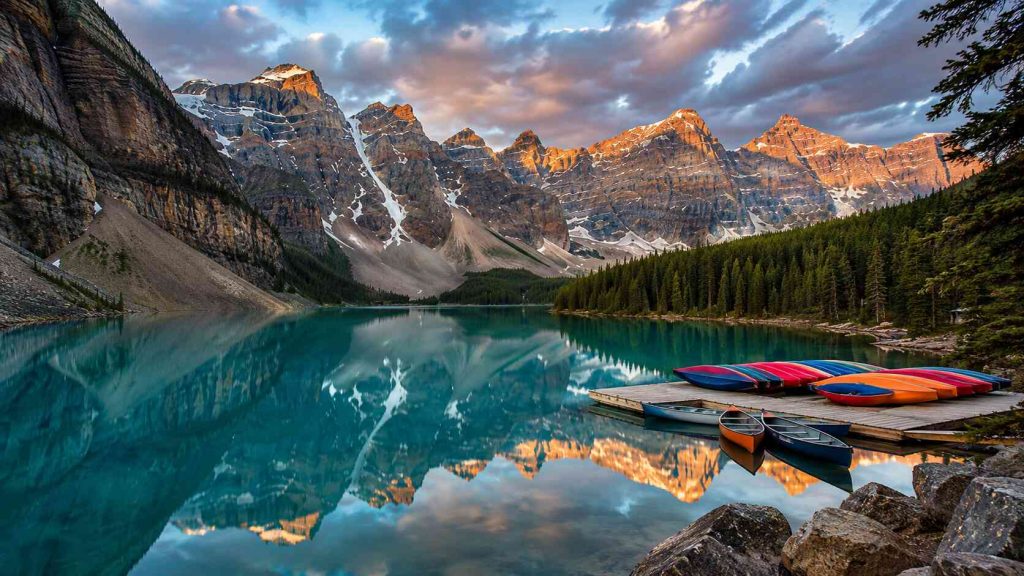
Canada’s oldest national park is also, by a strong argument, its most beautiful. Banff sits in the heart of the Canadian Rockies in Alberta, a landscape of glacier-fed lakes in colors that don’t look real — the famous turquoise of Lake Louise and Moraine Lake comes from rock flour suspended in the water, fine glacial silt that reflects light at a specific wavelength. On a clear morning, with the Rockies reflected perfectly in the surface, it’s the kind of scene that makes you understand why people become travel photographers.
The park covers over 6,600 square kilometers and offers dramatically different experiences depending on the season. Summer brings wildflower meadows, hiking the iconic Plain of Six Glaciers trail, and kayaking on Lake Louise. Winter transforms the park into a world-class ski destination — the Banff Sunshine, Lake Louise, and Mount Norquay resorts are all within easy reach of Banff town. Spring and autumn are the shoulder season sweet spots: fewer crowds, golden larch trees in October, and better wildlife sightings (bears, elk, mountain goats) when the tourist numbers thin.
The Icefields Parkway — a 230km drive between Banff and Jasper — is widely considered one of the most scenic road trips on earth. Plan a full day for it.
Best time to visit: June–August for hiking; December–March for skiing; October for larches.
Best for: Outdoor enthusiasts, families, photographers, road trippers.
Where to stay: Fairmont Banff Springs or Fairmont Chateau Lake Louise for the full Rocky Mountain grand hotel experience.
4. Santorini, Greece — Cliffs, Caldera, and the World’s Best Sunsets
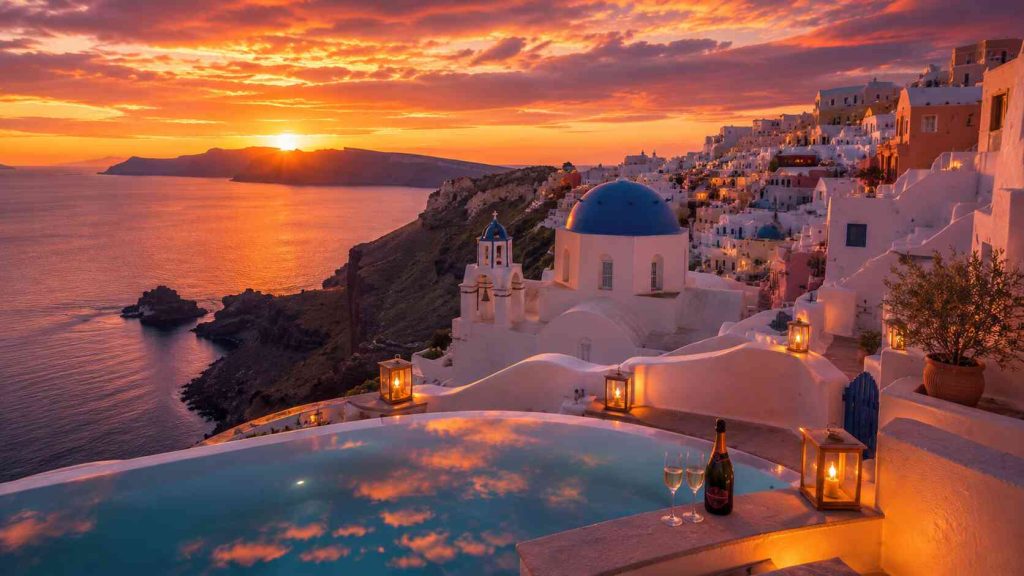
Santorini’s reputation as a cliché is both fair and irrelevant — it’s a cliché because it genuinely is that beautiful. The island is the remnant of a volcanic caldera that collapsed roughly 3,600 years ago, creating the dramatic crescent shape and the sheer cliffs that define the iconic villages of Oia and Fira. The whitewashed Cycladic architecture perched on those cliffs above the deep blue of the Aegean is one of the most photographed views in the world for a simple reason: it earns it.
The sunset from Oia is Santorini’s most famous moment — and yes, the clifftop fills with people every evening to watch it. The trick is to find a cave hotel or infinity pool with a private caldera view, where you can watch the same sunset with a glass of Assyrtiko wine and none of the crowd. The island’s volcanic soil produces some of Greece’s most distinctive whites — dry, mineral, and unique to this terroir.
For luxury hotel experiences, Santorini is one of the Mediterranean’s finest destinations. Cave-carved suites with private plunge pools overlooking the caldera are the island’s signature accommodation format, and several properties have refined this to an extraordinary level.
Best time to visit: May–June and September–October (shoulder season, fewer crowds, excellent weather).
Best for: Honeymoons, couples, luxury travelers, photographers.
Where to stay: Look for cave hotels with private caldera-facing terraces in Oia or Imerovigli.
👉 Also see: Grace Hotel Santorini Review — Luxury Caldera Retreat
You May Also Like


5. Bora Bora, French Polynesia — The Original Overwater Paradise
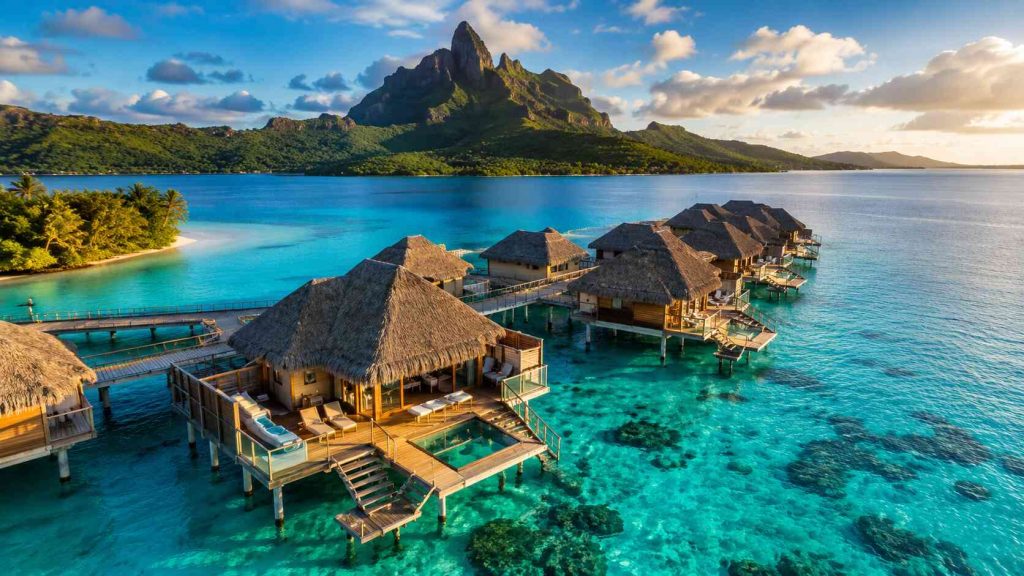
There are tropical islands, and then there is Bora Bora. The combination of Mount Otemanu — an extinct volcanic peak rising sharply from the center of the island — and the impossibly clear turquoise lagoon surrounding it creates a landscape that has defined the idea of tropical paradise for decades. French Polynesia invented the overwater bungalow here in the late 1960s, and Bora Bora remains the benchmark against which every other overwater property in the world is measured.
The island is small and largely given over to its resorts — most properties sit on the motus (small islets) that ring the main island, connected to it by boat. This means your experience is largely contained within your resort, which at properties like the Four Seasons or St. Regis is genuinely not a hardship. Lagoon tours by outrigger canoe, shark and ray feeding snorkels, and sunset cocktails over the water are the rhythm of a Bora Bora week.
It is the most expensive destination on this list — Bora Bora has essentially no budget option, and even the most modest overwater bungalow comes at a premium. For the right trip, though, it remains one of the most singular experiences in travel.
Best time to visit: May–October (dry season).
Best for: Honeymoons, anniversary trips, bucket list luxury.
Price range: From $900–$2,500+ per night at overwater bungalow resorts.
👉 See also: Four Seasons Resort Bora Bora Review and St. Regis Bora Bora Resort Review
6. The Maldives — Private Islands and the Indian Ocean
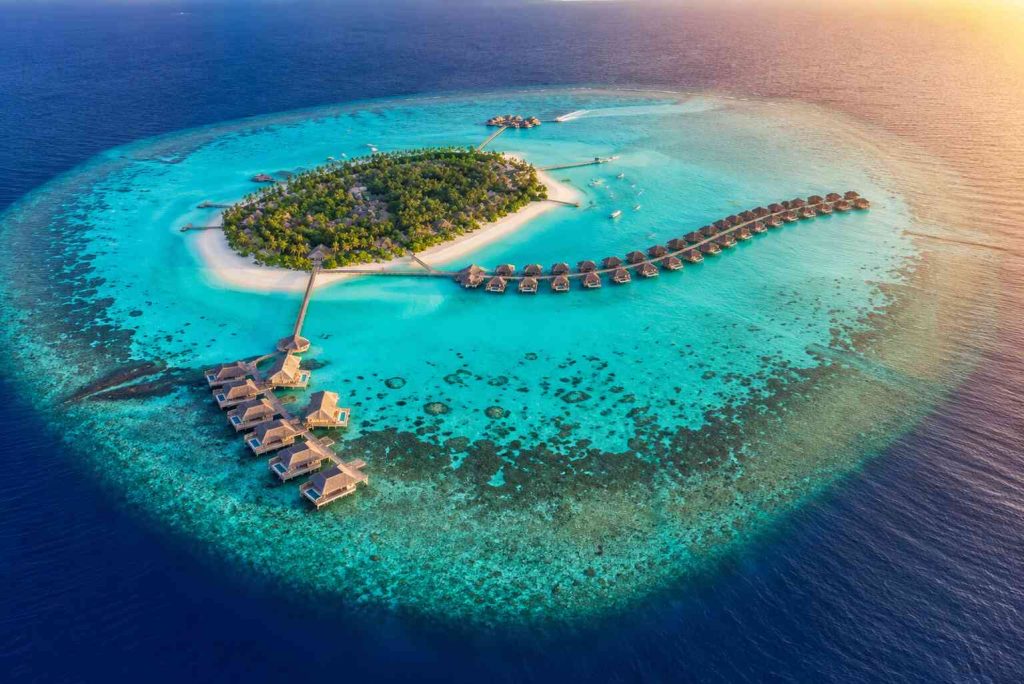
The Maldives operates on a concept that no other destination has replicated at scale: one island, one resort. Each property in the Maldives occupies its own private coral atoll in the Indian Ocean, which means no neighboring resorts, no local towns nearby, and a level of seclusion that is genuinely difficult to find anywhere else on earth. For travelers who want to completely disconnect — no agenda, no itinerary, just ocean and sky — the Maldives is the answer.
The marine life here is extraordinary: manta rays at Hanifaru Bay, whale sharks in the South Ari Atoll, reef sharks gliding under the jetty at dusk. The warm, calm Indian Ocean water makes diving and snorkeling exceptional year-round. For those who want to take the underwater experience to its furthest conclusion, Conrad Maldives Rangali Island offers The Muraka — the world’s first undersea residence, with a bedroom six meters below the ocean surface.
Best time to visit: November–April (dry season, calmer seas).
Best for: Couples, honeymooners, diving enthusiasts, anyone craving total seclusion.
Price range: From $500 to $3,000+ per night depending on resort and room category.
👉 Read: Conrad Maldives Muraka Review — Inside the World’s Most Luxurious Underwater Villa
7. Machu Picchu, Peru — The Lost City Above the Clouds
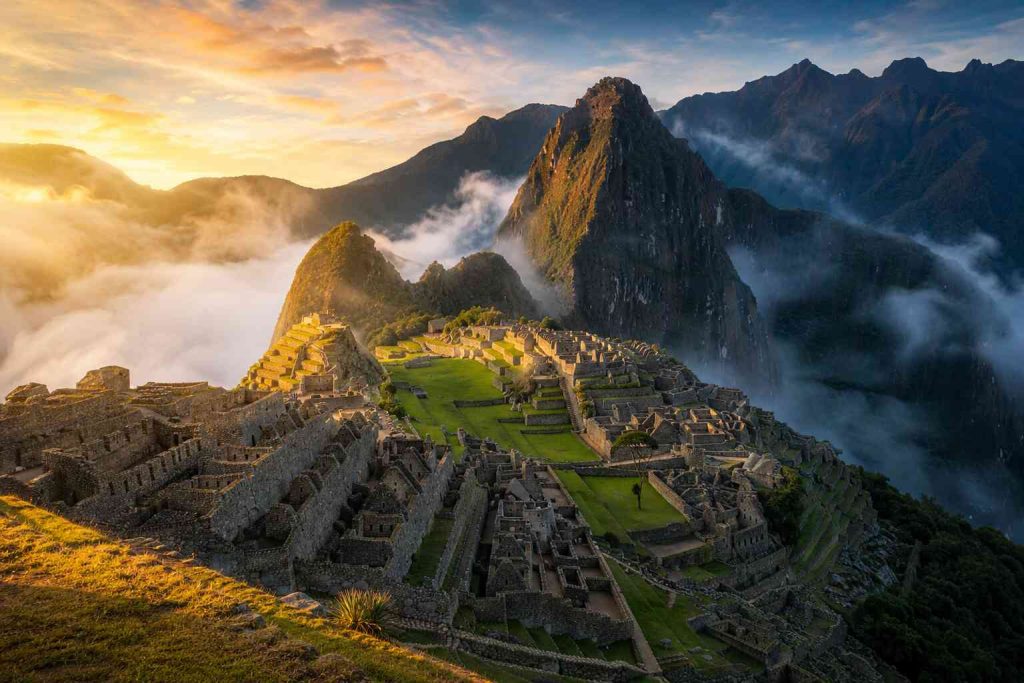
Machu Picchu sits at 2,430 meters above sea level in the Peruvian Andes, surrounded by cloud forest and dramatic mountain ridges. The Inca citadel was built in the 15th century and abandoned shortly after the Spanish conquest — rediscovered by the outside world only in 1911. Walking through the Sun Gate at dawn, watching the mist lift from the ruins below, remains one of the most powerful experiences in travel. No photograph has ever fully done it justice.
Access is controlled — daily visitor numbers are limited and timed entry tickets are required — which means advance planning is essential, especially for the classic Inca Trail hike (which requires booking up to six months ahead during peak season). Those who don’t want to trek can take the train to Aguas Calientes and the bus up from there, which is perfectly respectable and still arrives at the same extraordinary place.
The surrounding Sacred Valley offers additional Inca sites, local markets, and a slower Peru that rewards travelers who build extra days into their itinerary.
Best time to visit: May–September (dry season; best Inca Trail conditions).
Best for: History lovers, hikers, adventure travelers, solo travelers.
Tip: Book Inca Trail permits at least 4–6 months in advance for the dry season.
👉 Full guide: Machu Picchu Travel Guide
8. Phuket, Thailand — Tropical Luxury Perfected
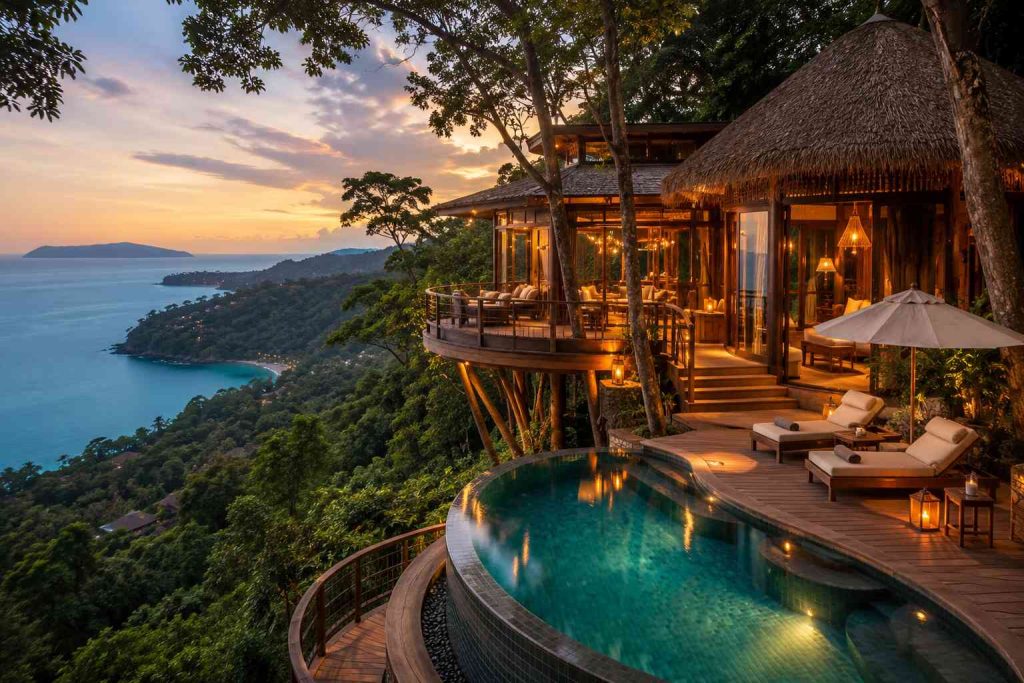
Thailand’s largest island has evolved far beyond its backpacker origins. The Phuket of today offers some of Southeast Asia’s finest luxury resort experiences — hillside properties with infinity pools overlooking the Andaman Sea, private beach clubs, world-class Thai cuisine, and a wellness culture (muay thai, yoga, traditional massage, detox retreats) that makes it as restorative as it is beautiful. For travelers who want tropical luxury with genuine cultural depth, Phuket delivers on both.
The island’s west coast beaches — Kamala, Surin, Bang Tao — are where the serious luxury properties cluster, and they’re strikingly beautiful: white sand, warm clear water, dramatic limestone karsts in the distance. The old Phuket Town area in the center of the island offers Sino-Portuguese architecture, excellent street food, and a side of Thailand that the beach crowds rarely find. Day trips to the Phi Phi Islands and Phang Nga Bay (with its iconic James Bond Island) are easy to arrange.
For travelers interested in treehouse-style luxury, Keemala Resort in the hills above Kamala Beach is one of Asia’s most distinctive properties — bird nest pool villas suspended in the jungle canopy.
Best time to visit: November–April (dry season on the west coast).
Best for: Couples, families, wellness seekers, luxury resort travelers.
Price range: Wide range — from $150 to $1,500+ per night depending on property.
👉 Read: Keemala Phuket Review — Treehouse Resort Thailand
9. Dubai, UAE — Where Ambition Becomes Architecture
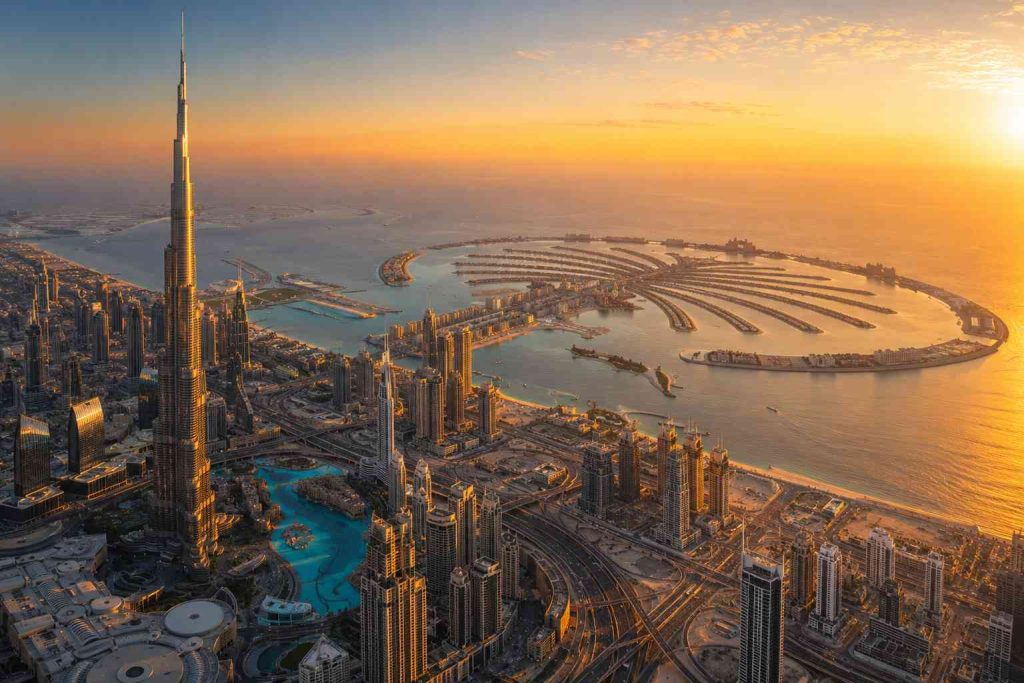
Dubai is the most unapologetically maximalist city on earth — and that is, depending on your temperament, either a selling point or a warning. For travelers who want to see what happens when unlimited resources meet limitless ambition, Dubai is unmissable. The Burj Khalifa remains the world’s tallest building. The Palm Jumeirah is a man-made island visible from space. Atlantis The Palm has a waterpark on a private island resort. The superlatives here are not hyperbole — they’re simply the facts of the place.
But Dubai also rewards travelers who look beyond the obvious. The historic Al Fahidi district offers a genuine glimpse of pre-oil Dubai — wind towers, narrow lanes, and the Dubai Creek that was the city’s original trading lifeline. The food scene has matured dramatically, with serious restaurants from global chefs sitting alongside excellent local Emirati cuisine. The desert beyond the city provides dune bashing, camel trekking, and some of the most extraordinary stargazing accessible from a major international hub.
Best time to visit: November–March (cooler temperatures; outdoor activities viable).
Best for: First-time Middle East visitors, luxury travelers, families, stopover trips.
Getting there: Dubai is one of the world’s best-connected airports — Emirates, Flydubai, and over 100 other airlines serve it.
👉 Read: Atlantis The Palm Dubai Review | Travel Tips for Visiting Dubai
10. Fiji — The World’s Most Underrated Paradise
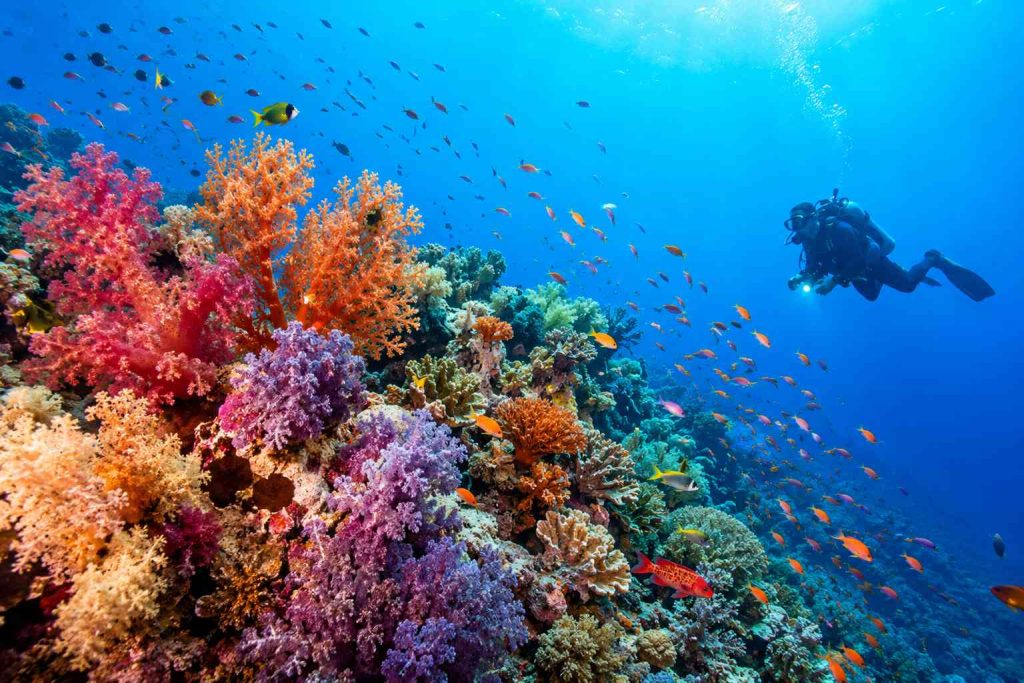
Fiji doesn’t always make the first shortlist — which is, frankly, the world’s loss. Known as the soft coral capital of the world, Fiji’s underwater landscape is arguably more vibrant and biodiverse than the Maldives or Bora Bora. Above water, the archipelago offers something neither of those destinations can: a real, living culture. The iTaukei Fijian people are among the warmest hosts in travel, village visits are a genuine and moving experience, and there’s a richness to being here that feels missing from more hermetically sealed resort destinations.
Fiji is also the most versatile luxury destination on this list — equally exceptional for couples (Likuliku Lagoon Resort’s overwater bures are among the Pacific’s finest), families (several resorts offer outstanding kids’ programmes alongside adult amenities), and serious divers (Beqa Lagoon’s shark dives are world-renowned). The price point is significantly lower than Bora Bora for a comparable level of luxury.
Best time to visit: May–October (dry season).
Best for: Couples, families, divers, travelers wanting value in luxury.
Price range: From $300 to $2,000+ per night — the best value luxury Pacific destination.
👉 Read: Likuliku Lagoon Resort Review — Fiji’s Best Kept Secret
👉 Also see: Bora Bora vs Maldives vs Fiji — Which Paradise Is Right for You?
How to Choose the Right Destination for Your Travel Style
Ten destinations, ten completely different experiences. Here’s a quick guide to matching the right trip to the right traveler:
- Best for adventure and the unexpected: Tromsø, Machu Picchu, Petra
- Best for luxury beach and overwater experiences: Bora Bora, Maldives, Fiji
- Best for honeymoon and romance: Santorini, Bora Bora, Maldives
- Best for families: Banff, Fiji, Dubai, Phuket
- Best for solo travelers: Machu Picchu, Petra, Tromsø
- Best value luxury: Fiji, Phuket
- Best “once in a lifetime” splurge: Bora Bora, Maldives
Frequently Asked Questions
What are the best luxury travel destinations in the world?
For pure luxury, the Maldives, Bora Bora, and Santorini consistently rank among the world’s finest. Each offers exceptional hotels, extraordinary natural settings, and experiences that justify the premium price. Fiji and Phuket offer comparable luxury at significantly better value.
Which destination on this list is best for a honeymoon?
Bora Bora and the Maldives are the world’s two most celebrated honeymoon destinations — both deliver extraordinary privacy, luxury, and natural beauty. Santorini is an excellent European alternative with a more cultural dimension. For couples who want romance with better value, Fiji is seriously worth considering.
How far in advance should I book these trips?
For Machu Picchu (Inca Trail permits) and Tromsø (glass cabin accommodations during Northern Lights season), book 4–6 months ahead minimum. For peak-season travel to Bora Bora, Maldives, and Santorini, 3–4 months is advisable. Banff in summer and Phuket in high season also benefit from early booking at better properties.
Which of these destinations is easiest to reach?
Dubai has one of the world’s most connected airports — accessible from virtually any major city. Phuket and Santorini are well-served from European and Asian hubs. Bora Bora is the trickiest, requiring a connection through Papeete (Tahiti) for most travelers. The Maldives requires a connection through Malé plus, often, a seaplane transfer to your resort.
Are these destinations suitable for first-time international travelers?
Most are excellent for first-timers. Dubai, Santorini, Phuket, and Banff are particularly well-set-up for international visitors with strong tourism infrastructure, English widely spoken, and straightforward logistics. Petra and Machu Picchu require slightly more planning but are absolutely manageable for independent travelers.
Final Thoughts
The best trips are the ones that change how you see the world — a little or a lot. Every destination on this list has that potential. A week in the Maldives recalibrates your relationship with silence. Machu Picchu puts human ambition in perspective. The Northern Lights remind you that the planet is still, in its best moments, genuinely magic.
Pick one. Start planning. The world is worth it.