
The Maldives is one of those destinations that seems simple from a distance — tropical island, overwater bungalow, turquoise water — and reveals its complexity only once you start planning. There are 26 atolls. Hundreds of inhabited islands. More than 150 luxury resorts, each accessible only by seaplane or speedboat. Price points that range from $150 a night on local island guesthouses to $50,000 a night for a private underwater villa. A transfer system that depends entirely on daylight hours. And a set of variables — atoll, season, resort tier, transfer type, meal plan — that interact in ways that make the planning process more consequential than most tropical holidays.
This guide exists to make that planning straightforward. It covers everything you actually need to know before you book: the geography, the best time to visit, how the transfer system works, what different price tiers deliver, which atolls suit which traveler, and the practical information that most resort websites have no incentive to tell you clearly. By the end, you’ll know exactly which type of Maldives trip matches your priorities — and what to expect once you arrive.
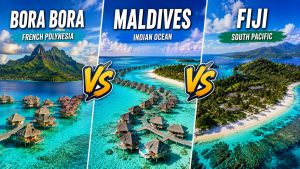
If you’re still deciding between the Maldives and the other major Indian and Pacific Ocean destinations, start with our comparison guide: Bora Bora vs Maldives vs Fiji — Which Paradise Is Right for You?
The Maldives at a Glance
| Detail | Info |
|---|---|
| Location | Indian Ocean, south-southwest of India and Sri Lanka |
| Capital | Malé (Velana International Airport — MLE) |
| Atolls | 26 natural atolls, ~1,200 islands |
| Resorts | 150+ luxury resorts across multiple atolls |
| Currency | Maldivian Rufiyaa (MVR) — USD widely accepted at resorts |
| Language | Dhivehi (official); English widely spoken at resorts |
| Time Zone | UTC+5 (no daylight saving) |
| Visa | 30-day visa on arrival, free for most nationalities |
| Best Season | November–April (dry season) |
| Alcohol | Not available on local islands; available at resort islands |
Understanding the Maldives Geography
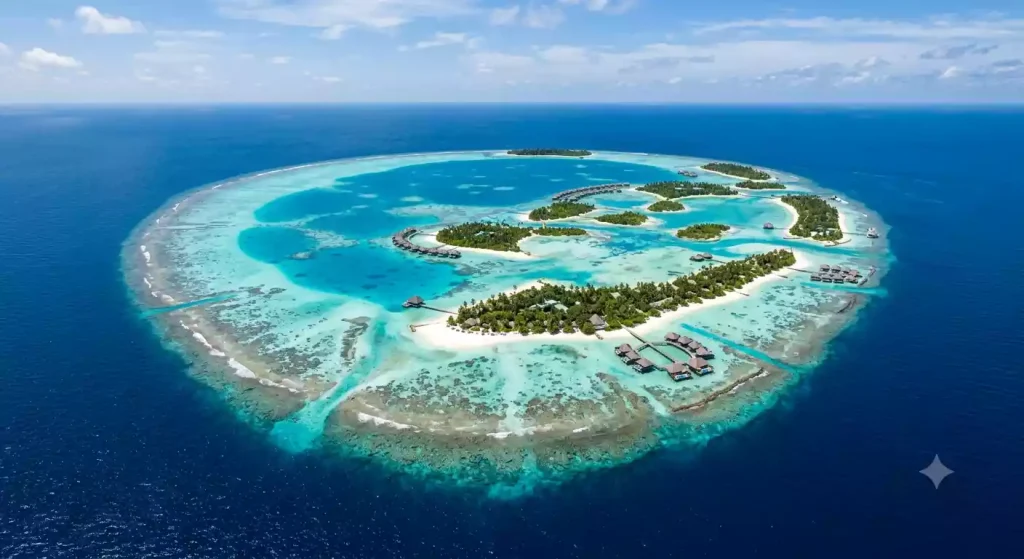
The Maldives stretches approximately 900 kilometers from north to south across the equator — a chain of 26 atolls that sit so low they barely rise above sea level. The highest natural point in the country is less than 2.4 meters above sea level, which makes the Maldives the flattest nation on earth and one of the most vulnerable to sea-level rise. What this geography produces at resort level is the defining visual of the destination: islands so low and so surrounded by water that from any overwater villa deck, the horizon appears to exist at eye level.
The key geographical distinction for travelers is the difference between atolls. The Maldives is not a single reef system — it is a series of separate atoll environments, each with different marine characteristics, different levels of development, and significantly different transfer times from Malé’s international airport. Understanding which atoll a resort sits in is the single most important piece of pre-booking research, because it determines transfer cost, transfer type (speedboat or seaplane), and to a meaningful extent the remoteness and marine quality of the experience.
The Main Resort Atolls — What’s Where
| Atoll | Transfer from Malé | Transfer Type | Known For | Key Resorts |
|---|---|---|---|---|
| North Malé | 15–45 min | Speedboat | Accessibility, coral reefs | Gili Lankanfushi, Four Seasons Kuda Huraa |
| South Malé | 20–40 min | Speedboat | Proximity, value tier | Anantara Dhigu, Centara Ras Fushi |
| Ari (North + South) | 25–40 min | Seaplane | Whale sharks, manta rays | Conrad Maldives, Four Seasons Landaa Giraavaru |
| Baa | 30–40 min | Seaplane | UNESCO Biosphere, mantas | Four Seasons Landaa Giraavaru |
| Noonu | 40–50 min | Seaplane | Remote, pristine reef | Soneva Jani, Velaa Private Island |
| Lhaviyani | 35–45 min | Seaplane | Diving, seclusion | Kuredu, Hurawalhi |
Best Time to Visit the Maldives
Dry Season: November to April
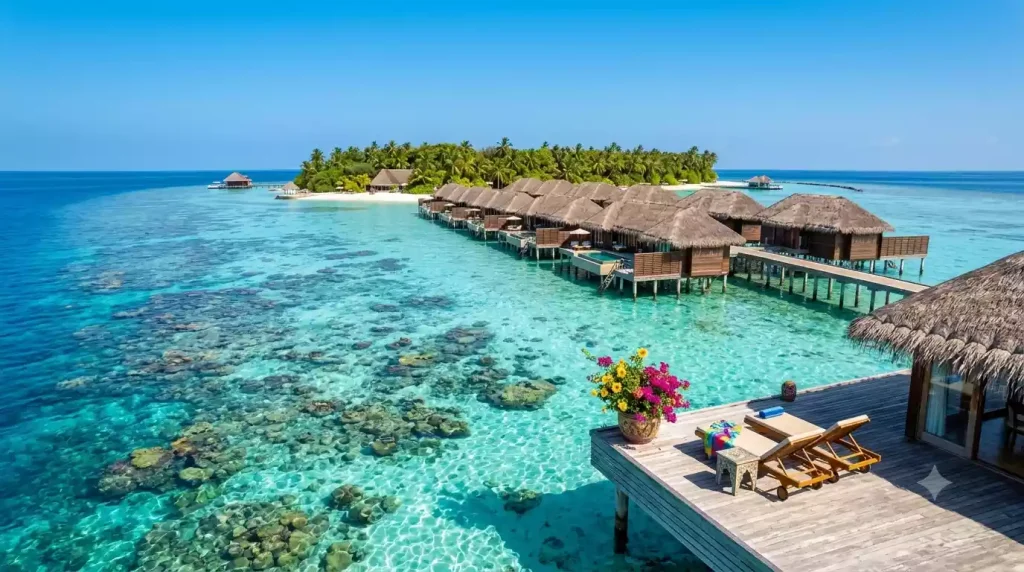
The northeast monsoon brings the Maldives’ dry season from November through April — this is when the weather is most consistently reliable, the seas are calmest, and underwater visibility peaks. January and February are widely considered the best months across the board: minimal rain, gentle breezes, and the clearest water conditions of the year. Snorkeling and diving visibility can exceed 30 meters during this period, and seaplane operations are rarely disrupted.
December is high season driven by Christmas and New Year’s demand — room rates at top resorts can increase by 50–100% over base rates during this fortnight, and availability at the best properties is extremely limited without 6–9 months’ advance booking. If your travel dates are flexible, January and February deliver equivalent or better weather conditions at significantly lower room rates.
Wet Season: May to October
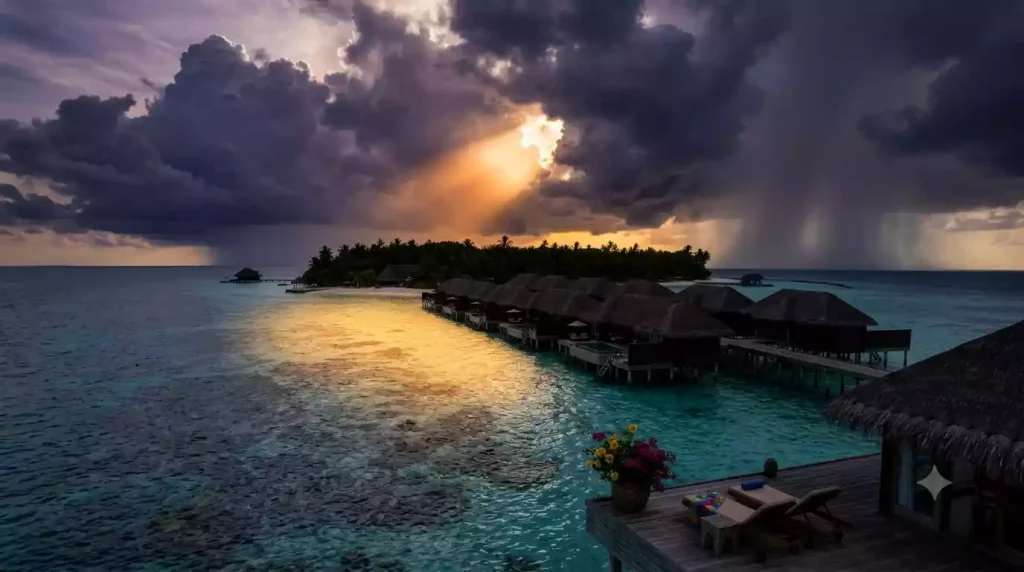
The southwest monsoon runs from May through October, bringing increased rainfall, stronger winds, and less predictable sea conditions. This does not mean continuous rain — the Maldives wet season is characterised by short, intense tropical showers followed by sunshine, rather than sustained grey rainfall. Many guests who visit in the wet season report excellent experiences, particularly those staying at resorts in more sheltered southern atolls.
The practical considerations are real, however. Seaplane operations can be disrupted or cancelled by poor visibility, which can strand guests in Malé if the weather deteriorates suddenly. The seas are rougher in some atolls, which affects speedboat transfers and the comfort of overwater villa decks. And the underwater visibility, while still often good, is less reliably exceptional than in the dry season.
The significant upside: room rates during the wet season drop 20–40% at most resorts, making properties that would otherwise be inaccessible genuinely affordable. For flexible travelers with reasonable weather tolerance and a secondary seaplane schedule in mind, May–October offers the Maldives at meaningful value.
Seasonal Marine Highlights
- Whale sharks (South Ari Atoll): Year-round, but most consistent January–April and August–November
- Manta rays (Baa Atoll, Hanifaru Bay): June–November — peak feeding aggregations
- Hammerhead sharks (Rasdhoo Atoll): December–April
- Bioluminescence: Most commonly observed June–October when plankton concentrations are higher
How to Get to the Maldives
International Flights into Malé
Virtually all international arrivals land at Velana International Airport (MLE) on Hulhulé Island, immediately adjacent to the capital Malé. The airport is well-connected to major hubs — Emirates via Dubai, Qatar Airways via Doha, Singapore Airlines, Turkish Airlines via Istanbul, and Etihad via Abu Dhabi all operate frequent services. From European hubs, most flights involve a single connection, usually through the Gulf. From Southeast Asia, Singapore and Kuala Lumpur are the most common transit points.
Flight time from Dubai is approximately 4 hours. From Singapore approximately 4.5 hours. From London (direct, as operated seasonally by British Airways) approximately 10.5 hours. For booking strategy and finding the best rates into Malé, see: How to Find Cheap Flights and Hotel Deals.
The Transfer System — The Most Important Thing to Understand Before Booking
Once you land in Malé, the journey to your resort is the part of Maldives planning that catches most first-time visitors off guard. Unlike almost any other destination, reaching your resort requires a secondary transfer — either by seaplane or speedboat — that adds both cost and logistical complexity to the trip.
Seaplane transfers operate during daylight hours only — typically 6am to 5pm — which means if your international flight arrives after dark, you will spend the night in Malé before transferring to your resort the next morning. The Maldives’ position near the equator means twilight is brief and consistent year-round. Most resorts that require seaplane transfers offer to arrange Malé accommodation for arriving guests, but this adds a night’s cost (typically $150–$400 depending on hotel) and at least half a day’s travel to the total journey.
Seaplane transfer costs are not always included in resort room rates — they’re frequently an additional $500–$800+ per person return, adding $1,000–$1,600 to a couple’s total trip cost before any other expenses are incurred. This is one of the most significant hidden costs in Maldives trip planning. Always confirm transfer inclusions and costs explicitly before booking.
Speedboat transfers operate around the clock and cost significantly less — typically $50–$200 per person return — because they’re reserved for resorts in the closer atolls (North and South Malé, parts of Ari Atoll). The tradeoff is that speedboat resorts are generally less remote and the surrounding reef is typically (though not always) less pristine than the further atolls.
Gili Lankanfushi is the best example of a luxury resort with a speedboat transfer that doesn’t compromise on quality — 20 minutes from Malé by boat, 24-hour transfer operation, no seaplane surcharge, and one of the most distinctive overwater villa experiences in the Indian Ocean.
What Does a Maldives Trip Actually Cost?
The Maldives has a reputation for being expensive, and for the most iconic properties it is. But the cost landscape is wider than most coverage suggests, ranging from local island guesthouses at $100–$200 per night to Conrad Maldives’ Muraka residence at $15,000–$50,000 per night. Understanding the tiers helps calibrate expectations.
Budget Tier: Local Island Guesthouses ($80–$250/night)
Since 2009, when legislation allowed guesthouses on inhabited local islands, the Maldives has had a budget accommodation option that didn’t previously exist. Local islands like Maafushi, Thulusdhoo, and Dhigurah offer guesthouses with comfortable rooms, good food, and direct access to excellent snorkeling and diving at a fraction of resort prices. The tradeoff: alcohol isn’t available on local islands (day trips to resort “bikini beaches” are possible), and the experience is fundamentally different from the private resort concept.
You May Also Like


Mid-Range Tier: $500–$1,500/night
This tier covers a wide range of 4-star and lower 5-star resorts with overwater villas — comfortable, well-located, and often with excellent reef access. Properties in this range typically don’t include meals or transfers, so budget for an additional $150–$250 per person per day in dining and $100–$400 per person return for transfers.
Luxury Tier: $1,500–$5,000/night
This is where the most discussed properties sit. Gili Lankanfushi starts from approximately $1,800 per night for a Lagoon Villa, with most rates including breakfast and the speedboat transfer. Soneva Jani starts from approximately $3,000 per night for a one-bedroom Water Retreat, not including the seaplane or most dining. At this tier, the total cost of a seven-night stay for two — accommodation, transfers, and three meals a day — typically runs $20,000–$40,000.
Ultra-Luxury Tier: $5,000–$50,000+/night
The apex of the Maldives market — properties like Velaa Private Island, Cheval Blanc Randheli, and the Conrad Maldives Muraka — operate at price points where the per-night rate is almost academic. The Muraka, the world’s first underwater villa, starts from approximately $15,000 per night and is arguably the most singularly unique accommodation available anywhere in the world.
The Best Resorts in the Maldives — By Category
Best for the Retractable Roof and Observatory Experience
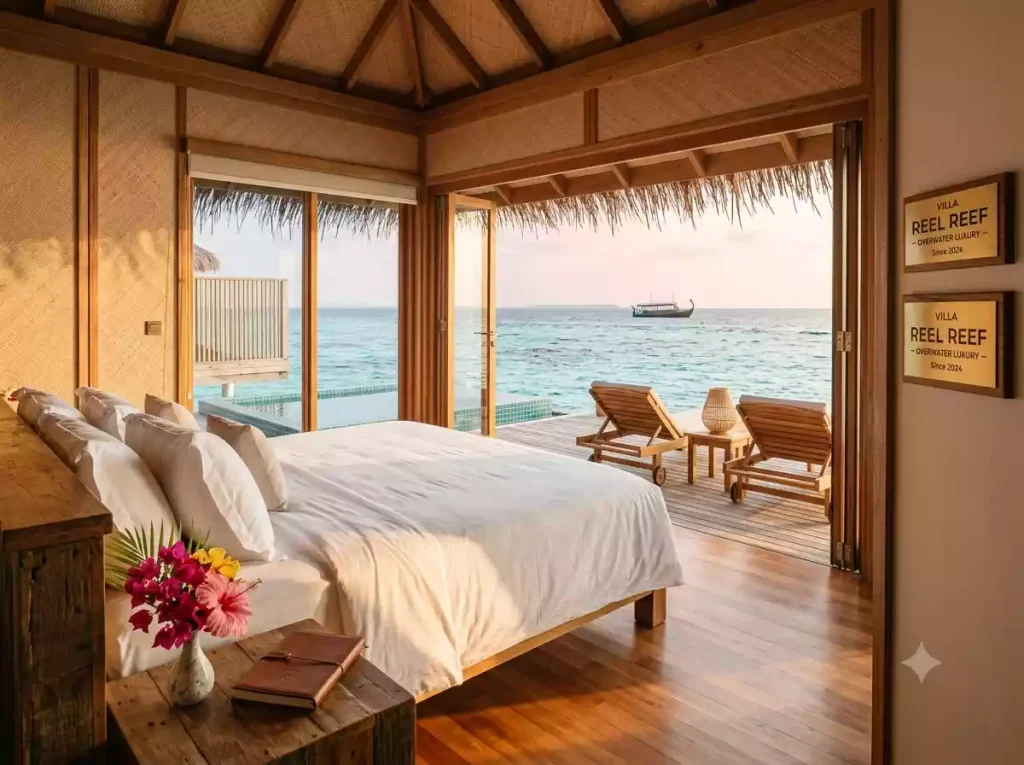
Soneva Jani in Noonu Atoll is the definitive answer for guests who want the most distinctive overwater villa experience in the Indian Ocean — the retractable bedroom roof that opens to reveal the night sky, the So Starstruck observatory with a resident astronomer, the outdoor cinema over the lagoon, and a house reef of exceptional quality. It is expensive (from ~$3,000/night) and requires a 45-minute seaplane transfer, but delivers an experience that no other Maldives resort replicates.
👉 Full review: Soneva Jani Review — The Most Extraordinary Overwater Resort in the Maldives
Best for Value and Transfer Simplicity
Gili Lankanfushi in North Malé Atoll offers the most strategically positioned luxury resort in the Maldives — 20-minute speedboat transfer from Malé (24 hours, no seaplane required), the distinctive Crusoe Residence overwater villas with their signature hammock nets above the lagoon, and a dedicated Mr. Friday butler per villa. Starting from approximately $1,800/night, it is the strongest value proposition in Maldives luxury — particularly when the $1,200–$1,600 seaplane saving for a couple is factored against more remote properties.
👉 Full review: Gili Lankanfushi Review — Barefoot Luxury Perfected in the Maldives
Best for the Ultimate Underwater Experience
Conrad Maldives Rangali Island in South Ari Atoll is home to The Muraka — the world’s first underwater villa, with a master bedroom 5 meters below the Indian Ocean surface. It is also home to Ithaa Undersea Restaurant, one of the world’s most extraordinary dining experiences. South Ari Atoll’s position along the whale shark migration corridor means near-year-round whale shark encounters — a marine experience unmatched at any other resort on this list.
👉 Full review: Conrad Maldives Muraka Review — Inside the World’s Most Luxurious Underwater Villa
Best for Families
Gili Lankanfushi and Soneva Jani both offer strong family programming alongside adult luxury — uncommon at the ultra-luxury Maldives tier, where most resorts are implicitly designed around couples. Soneva Jani’s Den kids’ club is particularly substantive, with marine biology sessions, a glass-blowing studio, and programming that engages older children seriously. For families who want a full private island experience, Kokomo Private Island in Fiji is also worth considering as a Pacific alternative.
What to Do in the Maldives
Snorkeling
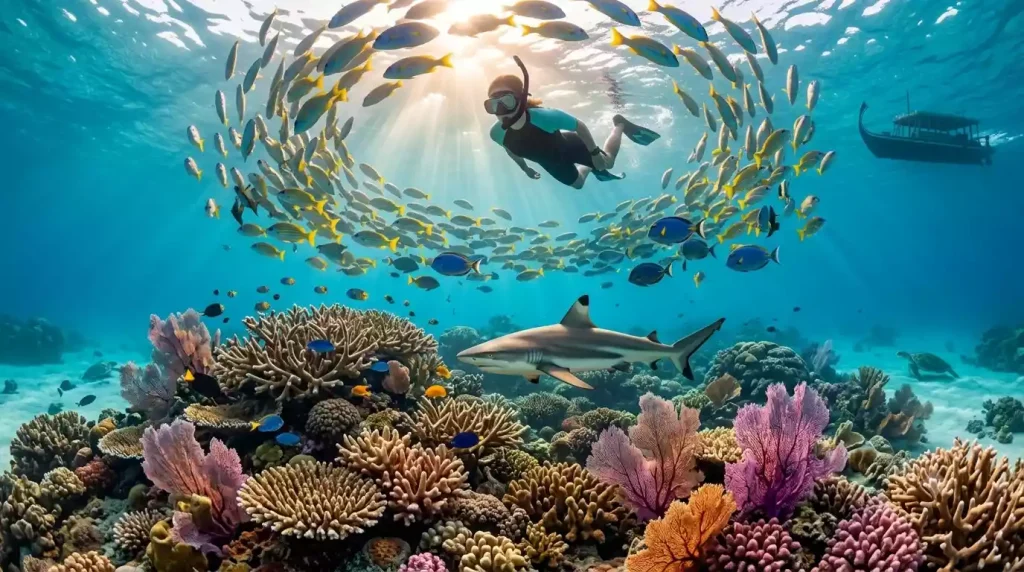
The house reef — the reef system immediately surrounding a resort island — is the primary snorkeling environment for most guests, accessible directly from the villa deck or the resort jetty without a boat trip. Quality varies dramatically between resorts and atolls. North Malé Atoll reefs (Gili Lankanfushi, Four Seasons Kuda Huraa) are good but show the effects of historically higher boat traffic. Noonu Atoll reefs (Soneva Jani) are in better condition due to the atoll’s remoteness. South Ari Atoll (Conrad Maldives) is exceptional for pelagic encounters.
Guided snorkel safaris with resort marine biologists are available at most luxury properties and significantly enhance the experience — knowing what you’re looking at, and where to find it, makes even a familiar reef feel new.
Scuba Diving
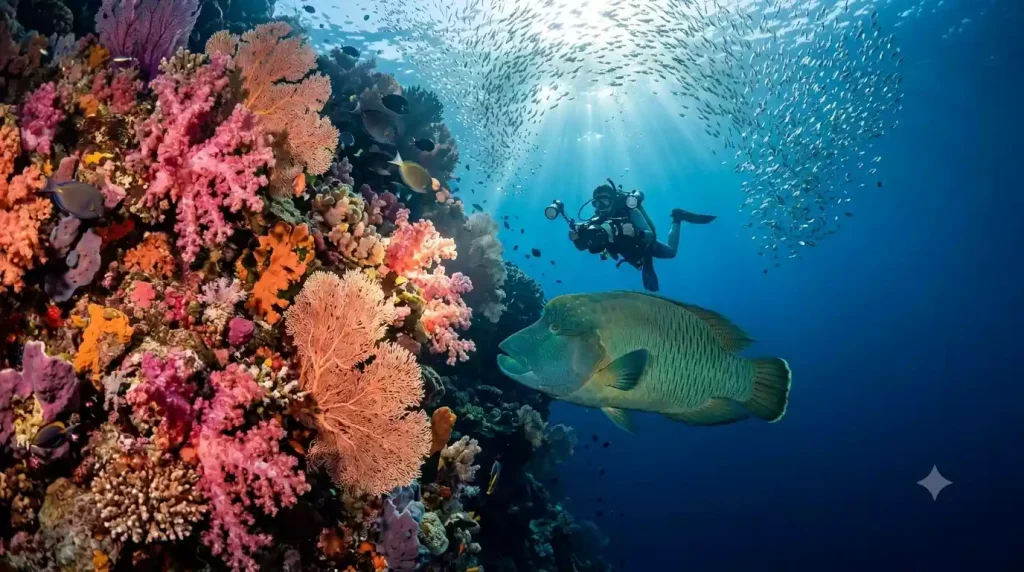
The Maldives is one of the world’s top five diving destinations by most rankings. Channel dives where currents concentrate pelagic life, wall dives with impressive soft coral formations, wreck dives, and the seasonal manta and whale shark encounters that no other Indian Ocean destination replicates at the same frequency. Most luxury resorts operate PADI-certified dive centres with daily guided dives to curated site selections. Night diving — watching reef sharks hunt under torch light — is available at most properties and is an experience genuinely different from daytime diving.
For more underwater experiences that push the marine immersion concept further: Most Beautiful Underwater Hotels in the World.
Water Sports
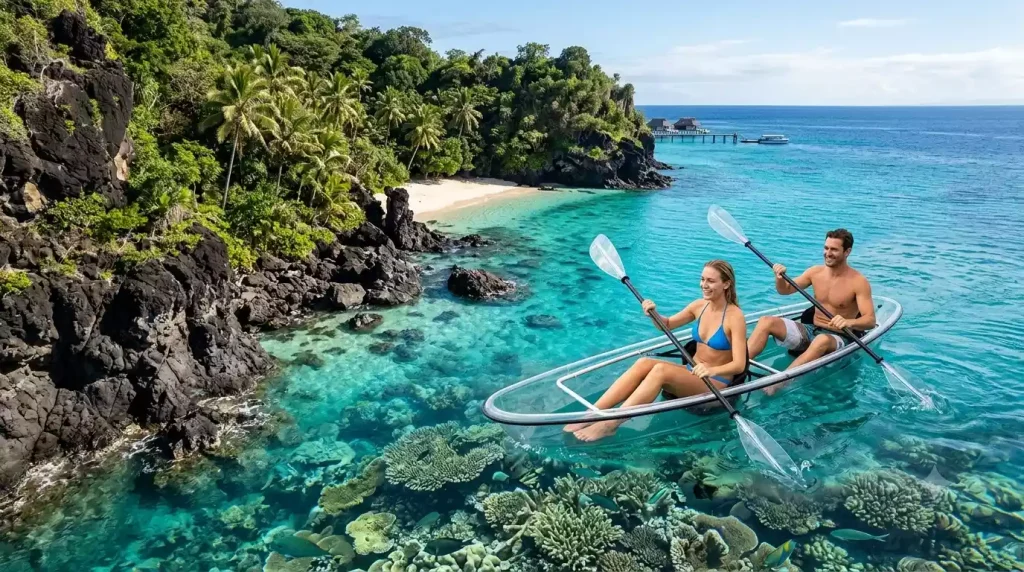
Most resorts include a full range of non-motorised water sports in the base rate — kayaking, stand-up paddleboarding, windsurfing, sailing on Hobie Cats. Motorised options (jet ski, wakeboarding, parasailing) are typically charged separately. Glass-bottom boat tours provide reef views for non-swimmers. Dolphin cruises on traditional dhonis at sunset are offered at most resorts and reward guests who go — spinner dolphin sightings in the Maldives are frequent enough to be a near-guarantee rather than a highlight.
Visiting Local Islands
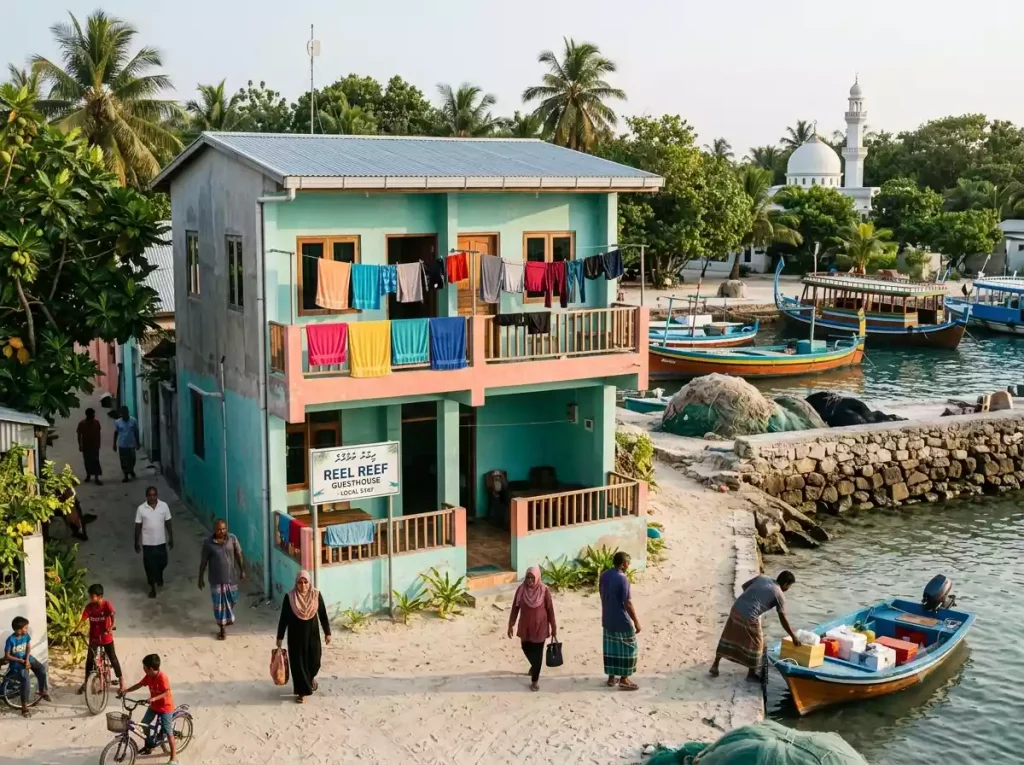
Most resorts offer day excursions to nearby inhabited islands — a genuinely valuable dimension that the one-island-one-resort concept can otherwise obscure. Maldivian culture, cuisine (the local short-eats snack culture is excellent), and the ordinary life of the archipelago’s 500,000 residents all become accessible through these visits. They are worth doing at least once, particularly for guests staying at resorts where the seclusion starts to feel hermetic after several days.
Spa and Wellness
Over-water spa pavilions are standard at luxury resorts — treatment rooms built over the lagoon, with the sound of the water below and natural light through slatted walls. The quality of treatment varies more than the setting does; the best resort spas (Soneva Jani’s Soneva Soul, Gili Lankanfushi’s over-water spa) offer Ayurvedic programmes and traditional treatments with genuine expertise behind them. The setting does significant work regardless.
Practical Information
Visa and Entry Requirements
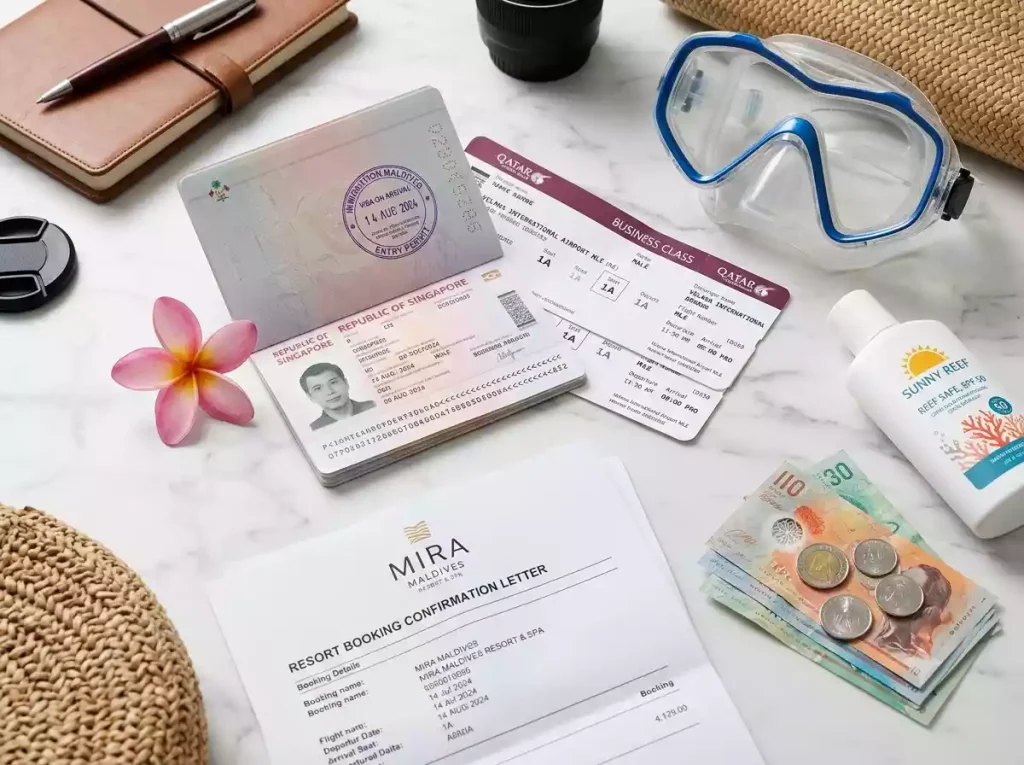
Most nationalities receive a free 30-day visa on arrival at Velana International Airport. No prior application is required for most passport holders. You’ll need a confirmed accommodation booking, a return flight, and sufficient funds to cover your stay. Check the current requirements for your specific nationality before travel, as policies can change.
Currency and Payments
Resort billing is universally in USD and credit cards are accepted everywhere. Most guests settle their resort account at checkout rather than paying daily. Local islands use Maldivian Rufiyaa for day-to-day purchases, though USD is widely accepted. Carrying a small amount of local currency is useful for local island visits.
Dress Code and Cultural Considerations
Resort islands operate under different rules from inhabited local islands. At resorts, swimwear and resort casual attire is entirely appropriate throughout. On local islands, modest dress is required — covering shoulders and knees. Most resorts provide sarong wraps for local island excursions. Alcohol is not available on local islands and should not be taken ashore.
What to Pack
Light linen and cotton resort wear. Reef-safe sunscreen only — many resorts enforce this and standard sunscreen is prohibited in the water to protect coral. Good snorkel mask (resort equipment is usually adequate but a personal fit makes a significant difference). Reef shoes for rocky entry points on local islands. Waterproof bag for boat transfers. For a comprehensive packing guide: Ultimate Travel Packing Checklist.
Health and Safety
No vaccinations are specifically required for the Maldives, though standard travel vaccinations (hepatitis A and B, typhoid) are sensible. Malaria risk is extremely low. Sun and heat are the primary health considerations — UV intensity at the equator is high, and acclimatization takes a day or two. Most luxury resorts have a resident doctor or medical staff on site. Travel insurance with medical evacuation coverage is strongly recommended for remote atoll resorts where medical facilities are limited.
The Maldives vs Other Overwater Destinations
The Maldives is not the only overwater bungalow destination in the world, and depending on your priorities, it may not be the best one for your specific trip.
- Bora Bora, French Polynesia offers more dramatic scenery — Mount Otemanu above the lagoon is the most iconic tropical resort backdrop in the world — but at the highest consistent price point of any overwater destination. The Four Seasons Bora Bora and St. Regis Bora Bora are the benchmark properties.
- Fiji offers more cultural richness, the world’s best soft coral diving, and significantly better value. Likuliku Lagoon Resort is Fiji’s finest overwater bure property; Kokomo Private Island offers the full private island experience on the Great Astrolabe Reef.
For the full three-way comparison: Bora Bora vs Maldives vs Fiji — Which Paradise Is Right for You? and our guide to the Best Overwater Bungalows in the World.
Frequently Asked Questions
When is the best time to visit the Maldives?
November through April is the dry season — the most reliable weather, calmest seas, and best snorkeling and diving visibility. January and February offer the most consistent conditions. December is high season (Christmas and New Year rates are significantly higher). May through October is the wet season — 20–40% lower room rates, but more variable weather and occasional seaplane disruptions.
Do I need a visa to visit the Maldives?
Most nationalities receive a free 30-day visa on arrival at Velana International Airport. No prior application is required for most passport holders — bring your confirmed resort booking and return flight details. Check the current requirements for your specific nationality before travel.
How does the seaplane transfer system work?
Seaplanes operate from the dedicated terminal at Velana International Airport during daylight hours only (approximately 6am–5pm). If your international flight arrives after dark, you must overnight in Malé before transferring to your resort the following morning. Seaplane transfers cost approximately $500–$800 per person return and are not always included in resort room rates — confirm this when booking. The flight itself takes 20–50 minutes depending on the atoll.
Is alcohol available in the Maldives?
Yes, at resort islands. The Maldives is a Muslim country and alcohol is prohibited on inhabited local islands, but resort islands operate under a separate licensing system that permits alcohol. Every luxury resort has a fully stocked bar. When visiting local islands on excursions, alcohol should not be brought ashore.
How much does a Maldives trip cost?
The range is extremely wide. Budget travelers staying in local island guesthouses can manage $150–$300 per day including accommodation and food. Luxury resort travelers should budget $500–$1,500 per night for accommodation at a good property, plus $150–$250 per person per day for dining (if not included), and $500–$800 per person return for seaplane transfers if applicable. A week at a top luxury resort (Soneva Jani, Gili Lankanfushi) for two typically totals $20,000–$40,000 inclusive of all costs.
Which Maldives atoll has the best diving?
South Ari Atoll for whale shark encounters (near year-round). Baa Atoll for manta ray aggregations at Hanifaru Bay (June–November). Noonu Atoll for pristine reef diving with less human pressure. North Malé Atoll is the most accessible and offers good diving across multiple sites, though reef health is slightly lower than the more remote atolls due to historical traffic.
Is the Maldives good for families?
Yes, with the right resort choice. Most ultra-luxury resorts in the Maldives are designed primarily around couples, but Soneva Jani and Gili Lankanfushi both offer substantive children’s programmes at the luxury level. For families seeking an alternative Pacific destination with stronger family credentials, Kokomo Private Island in Fiji is worth serious consideration.
What is the one-island-one-resort concept?
Maldives resort development is built on the principle that each resort occupies its own private coral island — no shared beaches, no neighboring properties visible, no local village to stumble into. Every guest on a resort island is a guest of that resort. The concept produces the absolute seclusion that defines the Maldives experience and differentiates it fundamentally from other tropical resort destinations.
Should I book directly with the resort or through a travel agent?
Both have advantages. Direct booking typically offers flexibility on cancellation and room requests. Virtuoso travel agents can access added-value benefits (resort credits, complimentary upgrades, breakfast inclusions, and suite upgrades) that are not available through direct booking or OTAs — particularly at Soneva Jani, Gili Lankanfushi, and Conrad Maldives, where Virtuoso partnerships are active. For first-time Maldives visitors navigating the transfer complexity, a specialist agent who knows the logistics is worth considering.
Final Thoughts
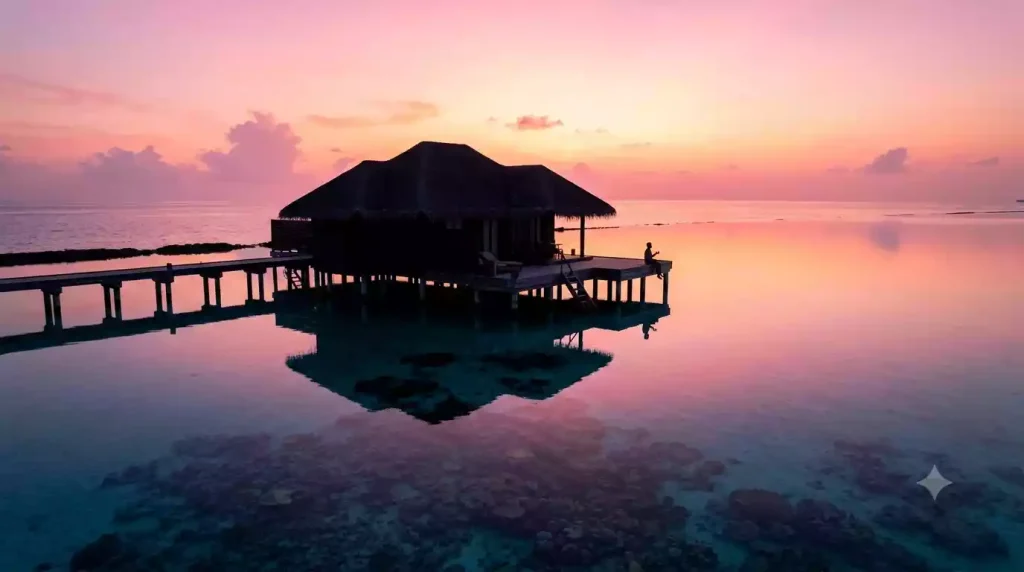
The Maldives rewards planning more than almost any other destination in the world. The difference between a trip that delivers its full potential and one that falls short is almost entirely in the decisions made before departure: which atoll, which resort, which transfer type, which time of year, and whether the total cost is properly understood rather than discovered upon checkout.
Get those decisions right, and the Maldives delivers what it promises — the most complete expression of Indian Ocean luxury available anywhere, in a setting that is genuinely unlike anything else on earth. The water is that colour. The reef is that good. The silence, on a clear morning from an overwater villa deck with nothing between you and the Indian Ocean in any direction, is that complete.
It earns the reputation. It just requires a little more homework than most destinations to unlock properly.
👉 Explore our Maldives reviews: Soneva Jani Review | Gili Lankanfushi Review | Conrad Maldives Muraka Review
👉 Plan your trip: How to Plan an International Trip for the First Time | Best Honeymoon Destinations in the World