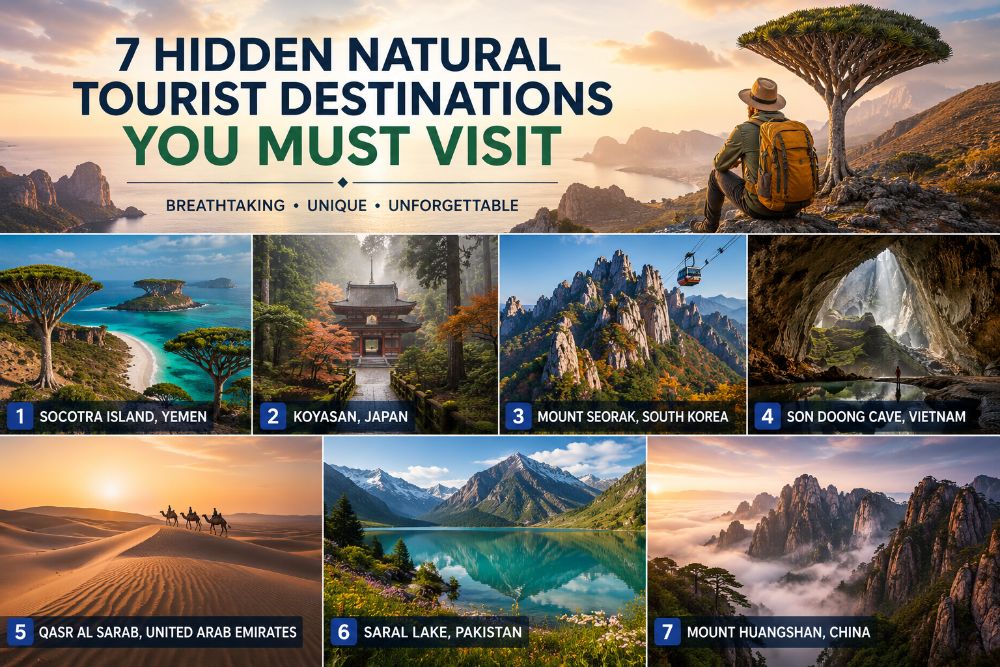
The world’s most famous natural wonders — the Grand Canyon, the Great Barrier Reef, Machu Picchu — deserve every bit of their reputation. But there’s another category of destination that rewards the traveler who digs a little deeper: places that are geologically extraordinary, visually unlike anything else on earth, and still largely free of the mass tourism that has complicated the experience of visiting the household names.
This list covers seven of the world’s most remarkable hidden natural wonders — destinations that belong on every serious adventure traveler’s radar. Some are difficult to reach. Some require permits, guides, or serious physical preparation. All of them are worth it. These are the places that people who’ve been everywhere still talk about years later. If you’re also looking for the more mainstream bucket list destinations, see our guide to the 10 Most Beautiful Natural Wonders in the World.
1. Socotra Island, Yemen — The Most Alien Landscape on Earth
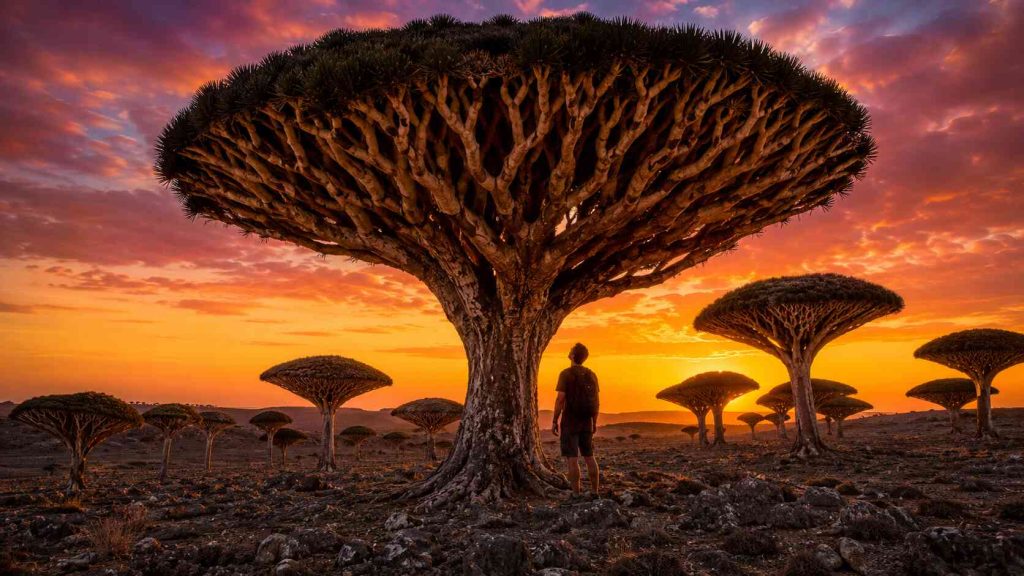
Socotra looks like it was designed by a science fiction set director working from a brief that said “make it feel like another planet.” The Dragon’s Blood Tree — Dracaena cinnabari — is the island’s most famous resident: a tree that grows only here, with a dense flat canopy of upward-reaching branches that looks exactly like an inside-out umbrella, as if the wind has been blowing from below for a thousand years. There are approximately 700 plant species on Socotra found nowhere else on earth — a level of botanical endemism that rivals the Galápagos. Bottle trees with swollen trunks, desert roses made of crystallized gypsum, and frankincense trees growing from bare limestone — the island’s flora alone justifies the journey.
The landscape itself is staggeringly varied for an island of 3,600 square kilometers. The Haggier Mountains in the center reach 1,503 meters and are blanketed in mist forest. The coastline alternates between dramatic cliffs and beaches of white sand backed by dragon blood tree forests. The interior plateau has an almost lunar quality — stripped limestone karst dotted with endemic succulents in colors ranging from grey-green to vivid orange-red. Because Socotra belongs to Yemen, access has been complicated in recent years due to the ongoing conflict on the mainland, but flights from Abu Dhabi have operated with varying regularity. For the traveler willing to navigate the logistics, it remains one of the most singular destinations on the planet.
The Socotri people speak a South Semitic language that has no written form and is entirely unrelated to Arabic. Staying with local families through community-based tourism programs is not just possible but genuinely recommended — the hospitality is extraordinary, and the cultural dimension adds a richness that a pure nature trip misses entirely.
Best time to visit: October–April (largely inaccessible during monsoon season May–September due to extreme winds and rough seas).
Best for: Serious adventure travelers, botanists, photographers, travelers seeking something genuinely unlike anywhere else.
Getting there: Flights from Abu Dhabi; check current political situation and entry requirements before booking.
👉 Planning your first major international adventure? Read: How to Plan an International Trip for the First Time
2. Koyasan, Japan — A Sacred Mountain Town Above the Clouds
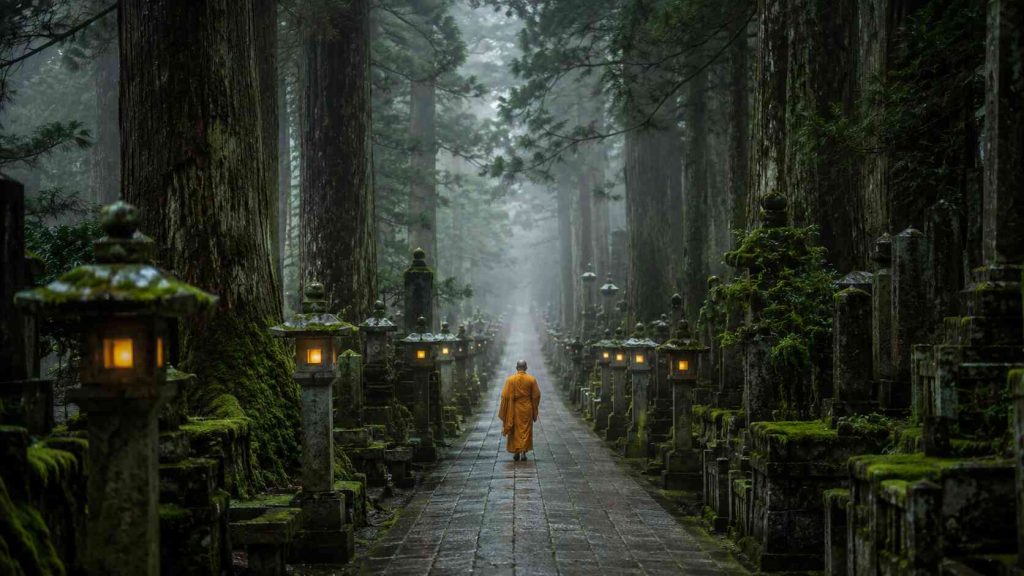
Koyasan — Mount Kōya — sits at 900 meters in the mountains of Wakayama Prefecture, accessible only by a steep cable car from the valley below. It was founded in 816 CE by the Buddhist monk Kūkai as the headquarters of Shingon Buddhism. More than 1,200 years later, it remains a functioning monastic community of over 100 temples, 50 of which offer shukubō — temple lodging where visitors sleep on futon mats, eat traditional Buddhist vegetarian cuisine (shōjin ryōri), and attend the 6am morning prayer ceremony conducted in a language unchanged since the 9th century.
The centrepiece of Koyasan is Okunoin — Japan’s largest cemetery, stretching for two kilometers through a forest of 200-year-old cedar trees. More than 200,000 memorial stones and moss-covered lanterns line the stone path, leading to the mausoleum of Kōbō Daishi, where believers hold that the monk is not dead but in a state of eternal meditation. Walking Okunoin at dawn or dusk, with lanterns glowing in the mist and cedar branches closing overhead, is one of the most genuinely atmospheric experiences in all of Japan — a country not short of atmospheric experiences.
Koyasan’s Kongobuji Temple, the Danjo Garan religious complex, and the Tokugawa mausoleum round out a destination that rewards a full two nights. The surrounding Kii Mountain Range — a UNESCO World Heritage landscape — offers ancient pilgrim trails connecting Koyasan to the shrines of Yoshino and the Kumano coast, one of Japan’s great long-distance walking routes.
Best time to visit: April–May for cherry blossom season; October–November for autumn foliage. Winter snow transforms the cedar forest but makes logistics harder.
Best for: Culture and history lovers, spiritual travelers, Japan itinerary travelers seeking depth beyond Tokyo and Kyoto.
Getting there: Train from Osaka Namba to Gokurakubashi, then cable car — approximately 2 hours total.
3. Son Doong Cave, Vietnam — The Largest Cave on Earth
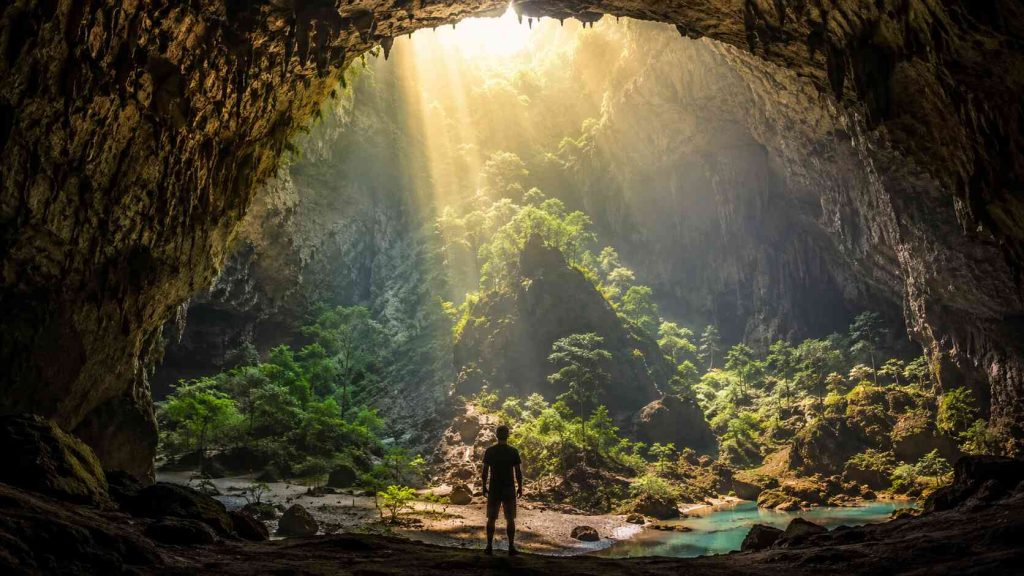
Son Doong was discovered by a local farmer in 1991 and surveyed by British cavers in 2009. When they measured it, they found they had to rewrite the record books: Son Doong is the world’s largest known cave passage by volume — 38.5 million cubic meters. The main chamber is 200 meters high, 150 meters wide, and stretches over 5 kilometers. It is large enough to contain a 40-story skyscraper. It has its own weather system. Where the ceiling has collapsed in two places, enough light penetrates to sustain an underground jungle of full-size trees. A river runs through it. The cave generates its own clouds.
Access is strictly controlled and exclusively through Oxalis Adventure, the only licensed operator. The expedition runs four days and three nights — jungle trekking to the entrance, rappelling 80 meters into the darkness, camping inside the cave, and swimming through underground rivers. Total group size is capped at 10 people per expedition. Annual permits sell out months in advance despite costing approximately $3,000 USD per person. This is a genuine expedition requiring good fitness, some comfort with confined spaces, and a high tolerance for getting wet and muddy underground.
For travelers who want the Phong Nha cave experience at a more accessible level, Hang En — the world’s third largest cave passage, also in Phong Nha-Kẻ Bàng National Park — is exceptional. The two-day trek involves camping on a sandbank inside the cave with a river beach, and it’s significantly more approachable than Son Doong while still being genuinely extraordinary.
Best time to visit: February–August (Son Doong closes September–January due to flooding).
Best for: Serious adventure travelers, bucket list seekers, travelers with strong fitness.
Booking: oxalis.com.vn — book 6–12 months ahead for peak season slots.
👉 For another extraordinary underground experience, see: Most Beautiful Underwater Hotels in the World — sleeping beneath the ocean surface is the closest thing to Son Doong’s subterranean magic in a luxury setting.
4. Seoraksan National Park, South Korea — Autumn’s Greatest Show in East Asia
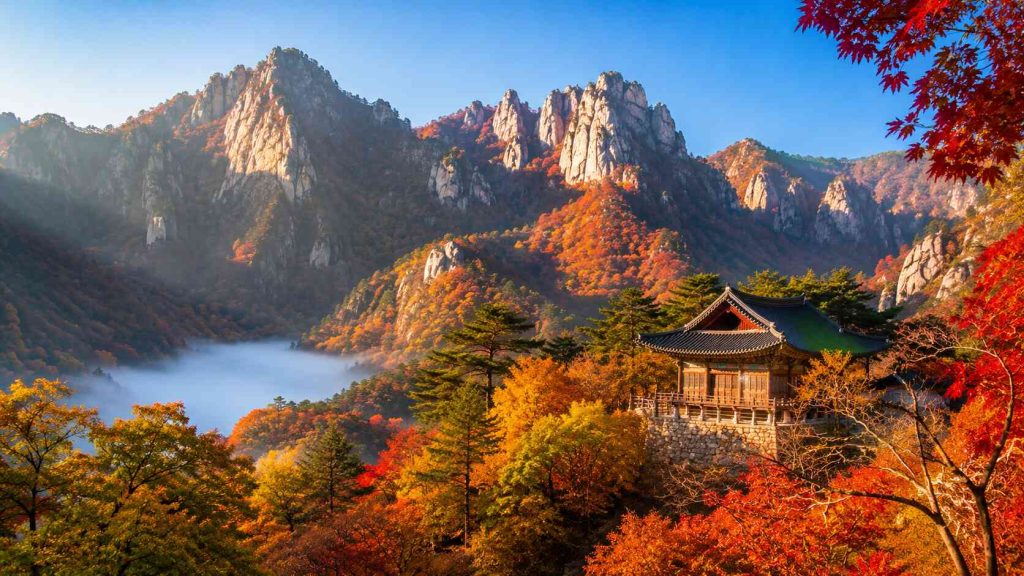
South Korea’s most celebrated national park covers 398 square kilometers of granite peaks, deep valleys, and dense temperate forest in Gangwon Province. Seoraksan — “Snowy Rock Mountain” — takes its name from the granite summits that hold snow well into spring, but its fame rests on what happens in late September and October, when the park’s deciduous forest turns. Maple, zelkova, birch, and oak produce a color display — deep crimson, flame orange, and bright gold against grey granite — that draws visitors from across the country and increasingly from around the world.
The park divides into Inner Seorak — more remote, requiring serious hiking — and Outer Seorak, which includes the cable car to Gwongeumseong Fortress and the popular Ulsanbawi Rock trail, a 1.3km climb up wooden stairs bolted directly into the cliff face to a series of massive granite boulders with panoramic valley views. The Biseondae trail follows a boulder-strewn river through Inner Seorak to a flat rock outcrop over a deep emerald pool — genuinely one of the most beautiful spots in East Asia. Sinheungsa Temple at the park entrance, dating to 652 CE, adds a cultural depth that pure mountain parks often lack.
Outside autumn, Seoraksan rewards every season. Spring brings azalea blooms across the lower slopes in April and May. Summer hiking through valley trails offers cool shade and crystal mountain streams. Winter, when the granite peaks accumulate snow and the park empties of visitors, has its own stark, magnificent beauty.
Best time to visit: Late September–late October for foliage; April–May for spring blooms.
Best for: Hikers, photographers, nature lovers, South Korea itinerary travelers.
Getting there: Bus from Seoul Express Bus Terminal to Sokcho (approximately 2.5 hours); the park is 20 minutes from Sokcho.
You May Also Like


👉 Building your South Korea trip around Seoraksan? See: How to Create the Perfect Travel Itinerary
5. Qasr Al Sarab, UAE — Luxury at the Edge of the World’s Largest Desert
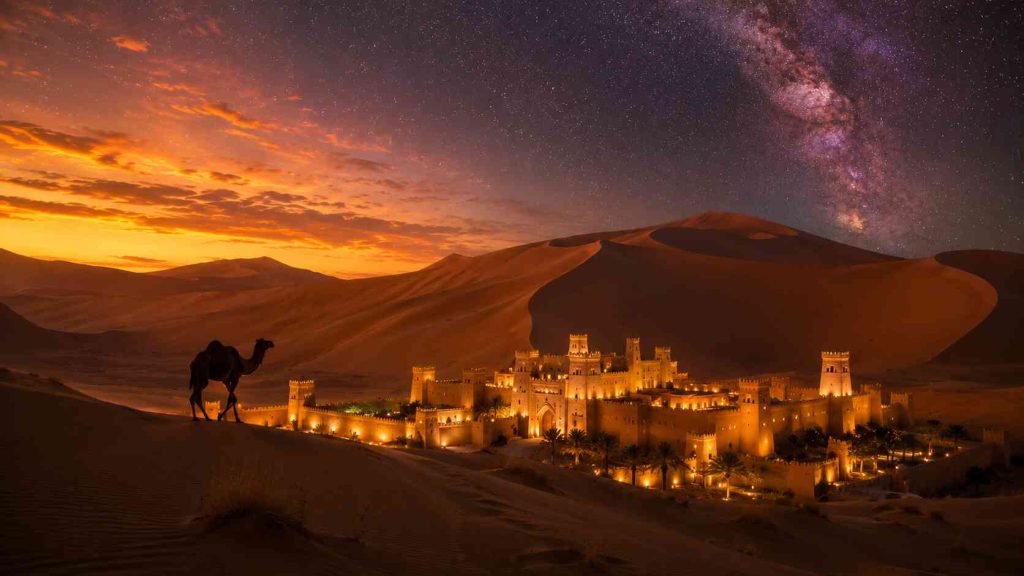
The Rub’ al Khali — the Empty Quarter — is the largest continuous sand desert on earth, covering 650,000 square kilometers across Saudi Arabia, the UAE, Oman, and Yemen. Virtually nobody lives here. The dunes reach 250 meters in height. The silence, away from any road, is total. Qasr Al Sarab Desert Resort sits on the edge of this landscape in Abu Dhabi’s Liwa region — a fortress-style property by Anantara that rises from the sand as if it has always been there, evoking a traditional Arabian caravanserai while delivering every modern luxury.
The experience is the intersection of extreme landscape and extreme comfort. Days bring camel treks into the dunes, sandboarding, falconry demonstrations, and guided 4×4 drives into the Empty Quarter interior where the dunes reach their full scale. At dusk, the dying orange light on 250-meter dunes and the complete absence of sound or other human presence produces a quality of stillness increasingly rare on a planet of eight billion people. After dark, the desert sky at this distance from city light is extraordinary — the Milky Way core is clearly visible from the resort terrace on clear nights.
The resort has 154 rooms and suites, a full-service spa, three restaurants, and a temperature-controlled outdoor pool. This is not desert camping dressed up as luxury — it is genuine luxury in a location that most luxury travelers never think to consider, which is precisely what makes it special.
Best time to visit: November–March (summer temperatures exceed 45°C; outdoor activities not viable May–September).
Best for: Luxury travelers, couples, photographers, travelers combining with Dubai or Abu Dhabi.
Getting there: Approximately 2.5 hours by car from Abu Dhabi; resort arranges transfers.
👉 Also see: Atlantis The Palm Dubai Review and Travel Tips for Visiting Dubai — perfect to combine on a UAE itinerary.
6. Ratti Gali Lake, Pakistan — The Himalayan Hidden Gem
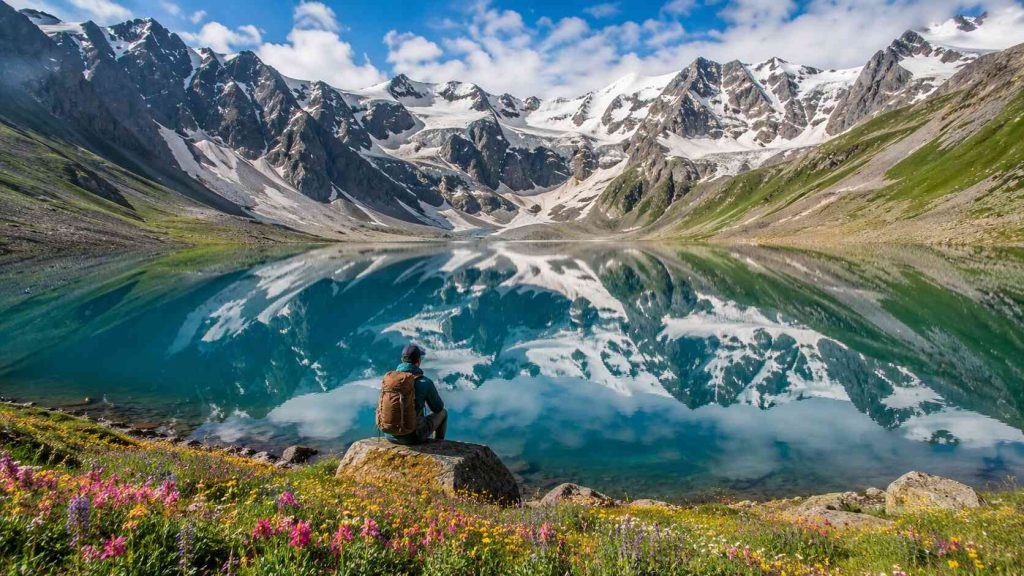
At 3,700 meters above sea level in the Neelum Valley of Azad Kashmir, Ratti Gali is a glacial lake of startling beauty that remains almost entirely unknown outside Pakistan and serious trekking communities. The lake sits in a high alpine bowl surrounded by Himalayan peaks — the water is a vivid turquoise-blue fed by glacial melt, fringed by alpine meadows that explode with wildflowers in July and August. On a clear day, the reflection of the surrounding peaks in the lake surface creates a scene that would be internationally famous if it were located in Switzerland or New Zealand. It is not in Switzerland. Almost nobody goes there. That is entirely to the benefit of those who do.
Getting here requires commitment. The base camp at Dowarian is accessible by jeep from Muzaffarabad, and from there a four to five hour trek at altitude reaches the lake. The terrain is steep and the altitude demands genuine acclimatization — arriving in Muzaffarabad a day or two before the trek is strongly recommended. Basic camping and porters can be arranged through local operators in Neelum Valley. The reward for this effort is a lake that feels entirely undiscovered: no fences, no entry fees, no crowds, no facilities — just one of the most spectacular mountain landscapes in South Asia and the particular satisfaction of being somewhere that the tourist infrastructure hasn’t yet reached.
The broader Neelum Valley itself rewards the journey — a narrow river valley running parallel to the Line of Control, with dense forests, fast-flowing rivers, and a series of villages largely unchanged by outside influences. It is one of the most beautiful valleys in Pakistan and one of the least visited.
Best time to visit: June–September (lake is snowbound and inaccessible October–May).
Best for: Serious trekkers, mountain photographers, off-the-beaten-path adventure travelers.
Getting there: Fly to Islamabad, transfer to Muzaffarabad by road (approximately 3 hours), then jeep and trek to the lake.
👉 Heading somewhere remote? Read first: Ultimate Travel Packing Checklist — especially the gear section for high-altitude trekking.
7. Mount Huangshan, China — The Mountain That Inspired a Thousand Paintings
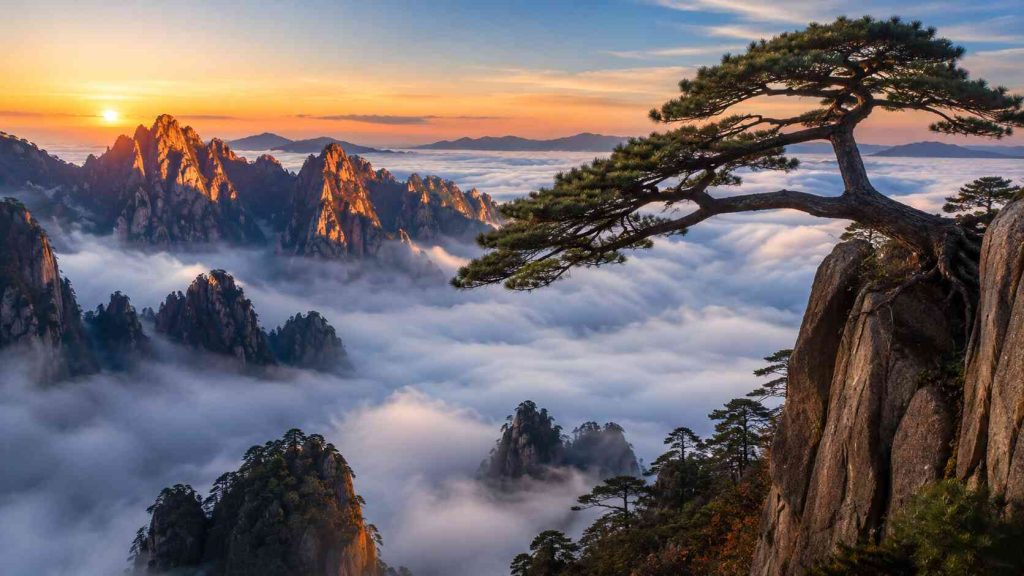
Mount Huangshan — Yellow Mountain — in Anhui Province has been the defining landscape of Chinese painting and poetry for more than a thousand years. The combination of ancient Huangshan pine trees growing from cracks in sheer granite cliffs, sea-of-cloud formations filling the valleys between peaks at dawn, and strangely shaped rock formations worn by centuries of wind and rain creates a visual vocabulary that appears throughout Chinese art so consistently that seeing the real thing feels like stepping into a scroll painting. The UNESCO designation came in 1990; the mountain’s cultural significance stretches back to the Tang Dynasty.
The mountain is divided into three main scenic zones accessible by cable car (east, west, and cloud valley), with hiking trails connecting the peaks. The western trails are more dramatic and considerably more demanding — steep stone steps cut directly into cliff faces, chains bolted into rock for exposed sections, and views down into cloud-filled valleys that make the height visceral. The Brightness Top (1,840m), Lotus Peak (1,864m), and the Welcoming Pine — a 1,000-year-old Huangshan pine growing horizontally from a granite cliff — are the signature landmarks.
Staying overnight on the mountain is the key to experiencing it properly. The first light of dawn, when cloud formations fill the valleys below the peaks and the granite turns gold in the early sun, is a different experience entirely from the daytime crowds. Several mountain-top hotels allow this — booking well in advance is essential, and the accommodation is basic relative to the price, but the access to the mountain at dawn and dusk more than compensates.
Best time to visit: March–May and September–November (best cloud formations; summer brings more rain and crowds, winter brings snow that is beautiful but closes some trails).
Best for: Hikers, photographers, cultural travelers, China itinerary travelers.
Getting there: High-speed train from Shanghai or Hangzhou to Huangshan North Station (approximately 2–3 hours), then bus to the mountain entrance.
👉 Love dramatic mountain and cliff settings? See also: 10 Most Stunning Cliffside Hotels in the World
What These Seven Destinations Have in Common
Seven completely different landscapes across seven different countries — but they share something important. None of them are easy. All of them require more planning, more effort, or more tolerance for uncertainty than a week in Santorini or Bali. And all of them deliver something that easier destinations can’t: the particular feeling of standing somewhere that the world hasn’t entirely arrived at yet.
That feeling is increasingly rare in travel, and increasingly valuable. The infrastructure of modern tourism — the overnight cable cars, the Instagrammable viewpoints, the luxury hotels positioned exactly where the sunset is best — has made the world’s famous destinations simultaneously more accessible and less surprising. These seven places are still surprising. That’s the whole point. For a contrast, see our list of 7 Unique Hotels Around the World — extraordinary stays that combine the unusual with genuine luxury.
Planning an Adventure to Remote Natural Wonders — What to Know First
- Book permits and guides early. Son Doong sells out a year in advance. Socotra requires flight bookings and often a guide arranged in advance. Ratti Gali needs local porter arrangements. For all of these, last-minute planning doesn’t work.
- Check political and safety situations. Yemen (Socotra), Pakistan (Azad Kashmir), and some border regions of Vietnam require current research before booking. Travel advisories change — always check your government’s official advice in the month before you travel, not when you first start planning.
- Train for altitude. Ratti Gali at 3,700m and Koyasan’s surrounding trails both involve significant elevation. Son Doong requires sustained physical effort over multiple days. Arriving fit makes a real difference to the experience and the safety margin.
- Travel insurance is non-negotiable. For remote destinations — especially Son Doong, Socotra, and Ratti Gali — medical evacuation coverage is essential. Standard travel insurance often doesn’t cover adventure activities. Read the policy carefully.
- Carry local currency. Cards don’t work in Socotra, are unreliable in Neelum Valley, and are limited in Son Doong’s base area. Cash in local currency, obtained before arrival, is the practical solution.
👉 Before any big adventure trip, also read: Common Travel Mistakes and How to Avoid Them and How to Find Cheap Flights and Hotel Deals — both are essential reading for getting the logistics right without overspending.
Frequently Asked Questions
What is the most remote natural wonder on this list?
Socotra Island and Ratti Gali Lake are the most logistically remote destinations on this list. Socotra requires navigating Yemen’s complicated access situation and limited flight options. Ratti Gali involves a multi-hour jeep track followed by a serious mountain trek at high altitude. Son Doong, while having a more established access system through Oxalis Adventure, is also genuinely remote — the cave entrance is accessible only after a full-day jungle trek from the nearest road.
How fit do I need to be to visit Son Doong Cave?
Reasonably fit, with multi-day hiking experience. The Son Doong expedition involves four days of trekking, rappelling, and wading through underground rivers while carrying a daypack. You don’t need to be an elite athlete, but you need to be comfortable with sustained physical effort, sleeping in tents, and getting very wet and muddy. Oxalis provides full equipment and experienced guides, but the physical demands are genuine.
Is Koyasan suitable for non-Buddhist travelers?
Completely. Temple lodging (shukubō) at Koyasan welcomes visitors of all faiths and none — the morning prayer ceremony is open to observation, the vegetarian food is excellent regardless of religious conviction, and the atmosphere of the cedar forest and cemetery is moving for cultural and aesthetic reasons entirely separate from belief. Many of the most enthusiastic visitors to Koyasan are secular travelers drawn by the history, the architecture, and the extraordinary atmosphere of Okunoin at dawn.
Can I visit Qasr Al Sarab without staying at the resort?
The resort offers day visitor packages that include a meal and use of facilities, making it possible to experience the desert setting without an overnight stay. However, the defining experiences of Qasr Al Sarab — the desert at dawn, the night sky, the complete stillness after the day visitors leave — are only accessible to overnight guests. A two-night stay is the minimum to experience the property properly.
Which destination on this list is best for first-time adventure travelers?
Seoraksan National Park in South Korea is the most accessible entry point — excellent infrastructure, easy transport from Seoul, safe and well-marked trails, and extraordinary scenery with no permit requirements or significant logistical complexity. Koyasan is also very accessible for first-timers, with a straightforward train-and-cable-car journey from Osaka and a well-established temple lodging system. Both destinations deliver genuinely exceptional experiences without the planning complexity of Son Doong or Socotra.
Final Thoughts
The seven destinations on this list share one quality above everything else: they ask something of you. Not always physically — Koyasan asks for attentiveness, Qasr Al Sarab asks for the willingness to be still — but they require more than showing up with a camera and a reservation. They reward preparation, patience, and a genuine curiosity about the world beyond the familiar.
That, ultimately, is what adventure travel is for. Not the photograph at the end. Not the story to tell later. The thing itself — standing somewhere extraordinary and feeling, however briefly, that the world is larger and stranger and more beautiful than daily life suggests.
These seven places will give you that feeling. All of them.